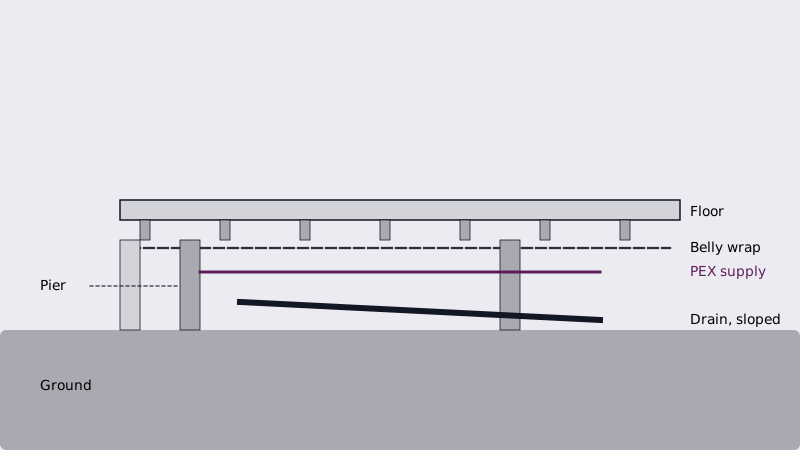
Plumbing under a mobile or manufactured home runs between the floor joists and the ground, usually behind a protective belly wrap, with a skirt around the outside. Supply lines are often PEX, and drains are plastic that must slope all the way to the connection. Access is the main difficulty. This is a specialty job, and the Murrieta Creek Plumbing home page is where you can start a request for it.
How is plumbing under a mobile home different from a regular house?
There is no basement or slab. The pipes run in a shallow cavity under the floor, hidden by a thin belly wrap, and the whole home sits on piers above bare ground. Supply and drain lines are lighter, fixtures are packed into small areas, and every repair begins by getting at the pipes.
Clearance is tight, so work happens lying down. The belly wrap has to be cut, then patched and re-sealed to keep out rodents and moisture. Insulation protects supply lines in cold weather, and heat tape is used in colder places than the valley floor. Drains need steady slope, so a sagging line holds water and clogs.
Manufactured homes are built to the federal HUD code, and plumbing connections at the site have their own rules. Ask the plumber which standards the work follows and who inspects it.
Which office issues a permit for plumbing under a manufactured home?
Location settles it. In a mobilehome park, California's state housing agency often handles permits and inspections, whereas a home on its own lot generally answers to the building office of the city or county. Before work starts, ask the park manager and the plumber which applies, and have the answer put in writing.
For a lot in the City of Murrieta, the Building and Safety Division lists 951-461-6062. Wildomar has its own office, listed at 951-677-7751. For unincorporated land the office is Riverside County, while San Diego County covers Fallbrook, Rainbow and De Luz. The county sites did not load for us, so check their numbers directly. We have not verified how permits work in each park, so treat this as a list of questions, not a ruling.
In California a contractor license is generally expected once labor and materials reach $1,000, and for any permit job. To check a license, use the state's hiring a contractor page.
How is new plumbing run beneath the home, step by step?
A typical sequence: shut off water and, if needed, gas; open the belly wrap in the work area; remove or protect old lines; support new supply lines on straps at the maker's spacing; run drain lines with steady slope to the main connection; connect fixtures; pressure-test; insulate; reseal the belly; and call for inspection.
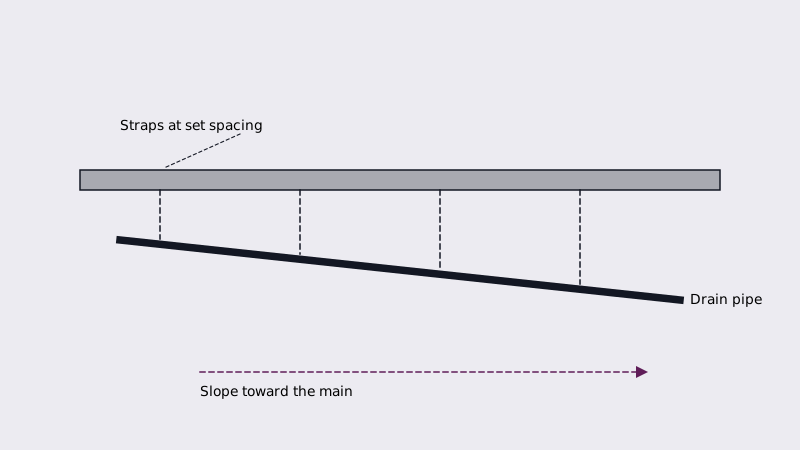
Supply lines get tested at pressure before anything is covered, and drains are checked with water for leaks and slope. Vents must reach the roof or use an approved air admittance valve where the code allows. Many owners watch for sagging pipe, so ask how the lines are supported and how often. A plumber should show you the finished run with a flashlight before the belly is closed.
Any gas piping in the job brings two requirements: a permit, and a contractor with the proper license. When gas is in the air, get out of the home, then phone SoCalGas on 1-800-427-2200 from the yard, and use 911 when anyone is in danger.
What materials are used under a manufactured home?
PEX is common for supply because it is flexible, handles movement and resists splitting better than rigid pipe. Drains are usually ABS or PVC. Copper is used for some connections. The water heater, fixtures and supply connections each have their own approved parts, so find out what the plumber plans to use, and why.
Avoid mixing materials without the right transition fittings. Look for clamps and supports that will not cut into the pipe. For an old home, the existing lines may be polybutylene or thin plastic that has aged badly. See polybutylene pipe replacement and PEX versus copper.
What do leaks under a mobile home look like?
You may see a soft floor, a stain or sag in the belly wrap, damp skirting, mold smell, a swollen cabinet base or an unexplained water bill. A low spot under the home where water pools is a clue. Rodent damage can also cut lines.
A meter test works: with all water off, a moving meter means a leak. Then a plumber checks the belly wrap and pipes. How plumbers find hidden leaks is explained in our guide on leaks and burst pipes, and there is signs of a ceiling leak if water appears above.
What about water heaters in a manufactured home?
Mobile home water heaters are usually smaller and installed in a closet or utility room, often with special venting and a certain approved model. Replacing one follows the same safety rules as any heater, including a relief valve discharge pipe and earthquake bracing. A permit may be required, so ask.
How quotes are built is covered in mobile home water heater replacement cost. Keep the discharge pipe uncapped and pointing down, and check the label for the right fuel and venting type.
How do you find a good plumber for this kind of job?
Get the contractor's license number and look it up through the state licensing board's site. Confirm that they do manufactured homes, collect references you can phone, get a written quote that states the scope, and compare two or more. A plumber who explains the access and permit plan before the visit is a better sign than a low price.
Be careful with anyone who wants most of the money in advance, who skips the permit, or who will not put the price in writing. California limits deposits on home improvement work. A closer quote is easier when you send photos of your pipes, the belly wrap and the water heater label.
What marks out an honest plumber?
An honest plumber points out the problem, explains the choices, states the price before starting, writes down changes, pulls permits when required and leaves the area clean. They do not push a repipe for one leak or claim that an emergency exists when it does not. Ask them to explain their findings in plain words.
Arranging the visit is our part. The local business that comes out quotes the work, and that business pays us a fee for the request. We cannot vouch for individual workmanship, so the license check and the written quote are your tools. Start on the price request page. For the cost side, see what a plumber costs in Murrieta.
Common questions
Can I do mobile home plumbing myself?
Many owners can manage small repairs, like replacing a faucet or a trap. Gas piping, major repiping and permit work all need a contractor who holds the proper license. Rules may apply inside a park, so ask the management and the permit office.
Do mobile homes freeze more easily?
Pipes under a manufactured home are exposed to outside air through the skirt, so they can freeze in a hard cold snap if the belly wrap or skirting is damaged. Murrieta's winters are mild, but rural lots can run colder. Insulation, an intact skirt and heat tape help.
How long does repiping a mobile home take?
A smaller home with open access may need a day or two, and longer where the belly wrap is extensive, access is poor or inspections are required. Expect the plumber to name a start date and estimate the hours without water.
Why does a manufactured home plumber need to see the crawl space?
Access, pipe condition, belly wrap, drain slope and the water heater cannot be judged from a phone call. A visit lets the plumber find hidden damage, such as rodent holes or sagging lines, and write a quote that does not change later.
Is PEX good for a mobile home?
Often, yes. PEX flexes with the home, installs with fewer joints and resists splitting in cold weather better than rigid pipe. It needs correct supports, UV protection and proper fittings. The plumber should use the type approved for the home and local code.
Last changed