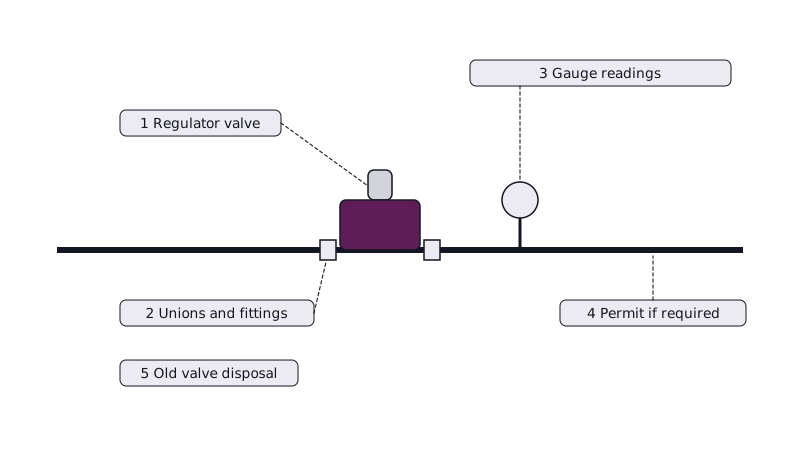
We have no verified Murrieta price list for regulators, so this page gives no dollar figure. The price comes from the plumber who inspects your house, and it moves with the valve type, the pipe diameter and how accessible the regulator is. What we can offer instead is a line-by-line tour of a fair quote, so that two offers can be set against each other. It belongs to the section on water pressure and valves.
What goes into the total price of a regulator swap?
The total adds up the valve, the work to fit it, and any extras the job uncovers. The regulator valve alone is a modest purchase. Labor dominates when the valve is buried, sits in a tight crawl space, or needs new shutoffs and fittings. Ask for an itemized quote instead of one round number.
A quote you can trust lists:
- The valve, with brand, model and pipe size.
- Labor, whether flat or hourly, and what the minimum is.
- Fittings and unions, because an old regulator often comes out with corroded connections.
- Gauge readings of the pressure ahead of the work and once it is done.
- A permit, if your building office wants one for the job.
- Disposal of the old valve.
A plumber who says "it depends" without asking where the valve is, how big your line is and what your pressure reads is guessing. Ask them to see the valve first, or send a photo.
How do Murrieta homes affect the price?
Location and plumbing age matter more than the part. About half of Murrieta homes date from 2000 onward, so the plumbing is not ancient, but access still varies house to house. Price stays low when the regulator is near the main shutoff and easy to reach. Slab and hillside lots complicate things.
Some local points:
- Valve location. A valve you can see and reach is quick. A buried or concreted-in valve takes longer.
- Hard water. Inland Empire water leaves mineral buildup on old valves, so removal can break fittings. That adds parts.
- Hillside lots. Pressure rises on lower ground, because elevation adds pressure. A house at the bottom of a slope may see far more than one higher up, even on the same street.
- Water district. Murrieta water comes from one of a few districts, most often Eastern Municipal Water District. Your bill names yours. The district sets the pressure in the street, the regulator tames it for your house.
- Rural lots off the district system sometimes use well or pump systems, where a regulator and pressure tank work together. Tell the plumber which you have.
For where it usually sits on a house, see locating the water pressure regulator.
What explains the price gap between plumbers?
Jobs differ, businesses differ and valves differ. A cheaper quote may use a basic valve and skip the gauge test, while a higher one may add a thorough check of the whole system. To compare, put the itemized quotes next to each other instead of looking only at the bottom line.
Things that quietly change the total:
- Valve grade. A cheap valve may fail earlier. A better one may carry a longer manufacturer's warranty. Find out what the warranty covers and who stands behind it.
- Scope. One plumber installs the regulator only. Another also checks the expansion tank, since higher regulated pressure and a closed system interact. See water heater expansion tanks.
- Service call fee. Some charge to arrive and credit it back to the job. Some do not.
- Time of day. After-hours work costs more.
If a quote seems low, ask what is not in it. If it seems high, ask which line is responsible. Our general plumber cost guide explains how plumbers set prices.
When is a new regulator worth paying for?
It pays off when pressure runs high or the symptoms appear: banging pipes, a dripping water heater relief valve, fixtures wearing out fast, or a bill that creeps up. Under the California Plumbing Code the limit is 80 psi, so anything above that is a genuine problem, not a preference.
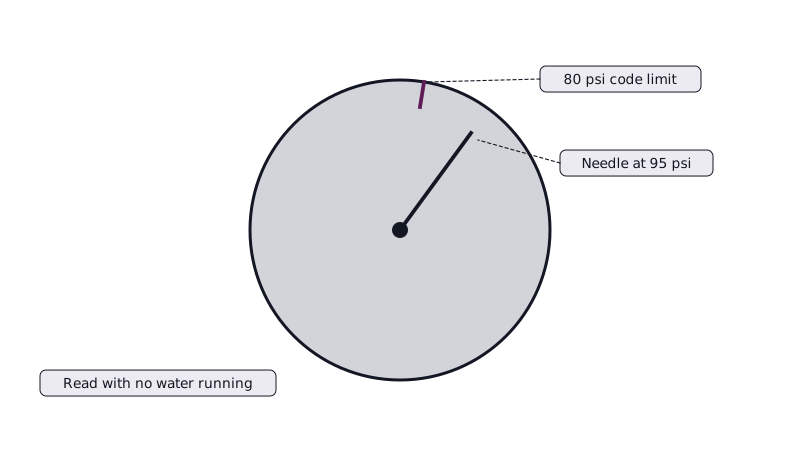
Test before you pay. A simple screw-on gauge for a hose bib does the job, and a plumber can do it in seconds. Read it at a time when nobody is using water. A reading well above 80 psi justifies a regulator. If it is fine, the cause of your trouble lies elsewhere, and you may be saved from buying one you do not need. Trouble at the heater is covered under the water heater pressure regulator, and unexplained bills under a high bill where no leak shows.
A failing regulator can also push pressure up, which is a danger to appliance hoses and water heaters. If the dial climbs at night, the valve is probably leaking by.
Is a permit needed?
Possibly. Rules differ by jurisdiction, and a straight like-for-like replacement is treated differently from new piping. Inside Murrieta, ask the City of Murrieta Building and Safety Division. In unincorporated areas such as French Valley and Winchester, the county office applies. Find out from the plumber who handles permits, and whether the quote includes the permit fee.
To begin comparing, request a quote. Your request is sent by us to local plumbing businesses that pay us a fee, and the price comes from whichever business visits. The home page lists other jobs.
Common questions
How much time does a regulator replacement take?
Usually an hour or two if the valve is accessible, longer if the fittings are corroded or the valve is buried. The main water is shut off during the job, so plan around showers and laundry. Ask the plumber to read the pressure again at the end and tell you the number.
Which questions belong before I accept a regulator quote?
Request the valve brand and model, and whether the price covers pressure readings before and after, who pulls any permit, what the warranty includes and whether old fittings are part of it. Ask if the plumber would also inspect the expansion tank. Have the answers written on the quote, not given by phone alone.
Can I swap a pressure regulator on my own?
Some jurisdictions allow it, but a mistake can open a leak in the main line and cut water to the whole house. Where a permit applies, a contractor is often the simpler path. If you try it yourself, shut off the main and ask your building office first.
What pressure should my house have?
Most plumbing is built for roughly the middle range, and the plumbing code puts the ceiling at 80 psi. Measure yours with a gauge rather than guessing. If you read well above 80, get a regulator. If you read very low, the cause is more likely a clog, a partly closed valve or the street supply.
Last changed