Yes, a plumbing contractor can run, repair, move and cap a gas line. In Murrieta the work normally needs a permit together with an inspection, and new piping gets a pressure test before the gas comes on. This is not a do-it-yourself job. The sections below describe the work, the factors behind the price, and how to send a request that we pass to one nearby plumbing business. The Murrieta Creek Plumbing home page lists our other services.
Smell gas at this moment? Get out of the building. Once outside, use the SoCalGas line on 1-800-427-2200, and dial 911 if anyone is in danger.
Can a plumber bring gas to a new stove, clothes dryer or fireplace?
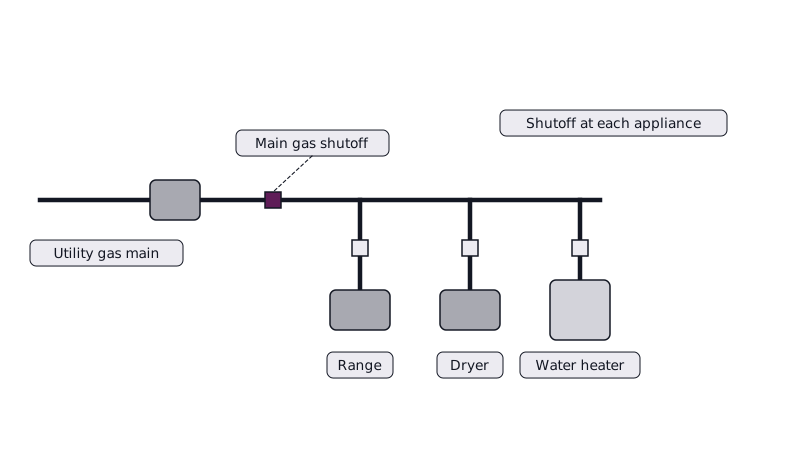
Yes. Plumbing contractors commonly extend gas lines to ranges, dryers, outdoor kitchens, fire pits, pool heaters and gas fireplaces. Working from the total load, the plumber chooses the pipe size, routes it, fits a shutoff at the appliance, tests it and arranges the inspection. Nothing is connected to the meter until the line passes.
The usual jobs, from simplest to hardest:
- Appliance connection. Replacing a flexible connector on an existing stub-out.
- Stove or dryer line. A new branch off an existing gas line to a kitchen or laundry room.
- Fireplace or fire pit. A line to a gas log set, often through an exterior wall or slab.
- Outdoor kitchen, pool heater or backup generator. Longer runs, often underground, that may need a bigger pipe.
- Water heater. New or relocated heaters, covered on our water heater repair page.
Sizing matters. Adding a range to a line that already feeds a furnace and heater can starve all three. That is the main reason a plumber calculates the demand before adding anything.
Is a license required for gas piping?
A contractor license is required in California when a job needs a permit, or when labor and materials add up to $1,000 or more. Gas piping almost always needs a permit, so give the job to a contractor who holds a California license. Look the contractor up at cslb.ca.gov, the website of the Contractors State License Board, before work begins.
Two practical points. First, the rule is generally described that way, so confirm the current threshold on the CSLB site. Second, permit offices differ by address:
- Inside Murrieta: City of Murrieta Building and Safety Division.
- Inside Wildomar: City of Wildomar Building and Safety.
- Unincorporated parts such as French Valley and Winchester: Riverside County Building and Safety.
- Fallbrook, Rainbow and De Luz: San Diego County Building Services.
Find out who applies for the permit, and if the quote already includes that fee. See neighborhoods we serve for how the areas divide.
Which pipe material carries natural gas in a home?
Residential gas lines are usually black steel pipe, flexible stainless tubing called CSST, or, underground and outdoors, coated steel or specially rated plastic. Local code, run length and pressure determine which is chosen. A plumber picks it, and the inspector checks it. You should not substitute plumbing pipe.
A few distinctions that matter:
- Water pipe fittings, such as PEX and copper, are not gas fittings. Mixing them is a hazard.
- Flexible appliance connectors cover only the final stretch to the appliance, never a full line.
- CSST has bonding requirements in the code. Ask whether the job includes that.
- Propane and natural gas use different pressures and orifices. Some rural homes run on propane, so confirm what you have.
Homes around Fallbrook, Rainbow and De Luz may get their gas from a different utility. Check your bill before assuming SoCalGas.
Will a plumber relocate or seal off a gas line?
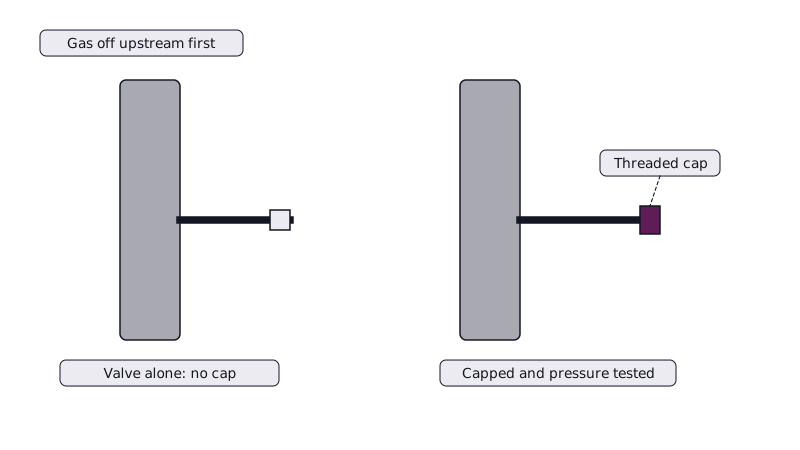
Yes. Rerouting a line for a kitchen remodel, or sealing one once an appliance is gone, is routine plumber work. Capping means closing the stub with a proper cap after shutting the gas off upstream, then pressure testing. A valve alone does not count as a permanent cap, and neither does tape.
Common reasons to call:
- A remodel that relocates a range or dryer. The same kind of planning is described in bathroom remodel plumbing.
- Removing a gas fireplace or old wall heater and leaving a safe, sealed line.
- Replacing corroded pipe discovered during a repair.
- Adding a shutoff or a quake-triggered valve. See the seismic gas valve guide and how the fitting is done.
If you find an old uncapped pipe in a wall, treat it as live until a plumber confirms otherwise.
What will gas pipe repair or a new run set me back?
The price depends on pipe length, material, wall or slab access, number of appliances, and whether a permit and inspection are included. Short appliance hookups cost less than long underground runs. We do not quote invented figures here. The plumber who visits gives a price after seeing the layout, and the cost page lists what changes it.
Read gas line plumber costs in Murrieta for the factors in more detail, and flexible gas line sizes if you were quoted a particular size.
The biggest price swings come from:
- Distance from the meter or nearest tee.
- Concrete or stucco cutting.
- Trenching in a yard.
- Pipe upsizing when your total demand has grown.
- Fees for the permit and inspection, which your building office sets.
What should you have ready for the visit?
Have the appliance model numbers, the location of your gas meter, a rough sketch of where the new line should end, and any plans if you are remodeling. Mention the gas shutoff you know of. Keep the space near the meter, the appliance and the planned route of the line free of clutter so the plumber can work.
Also tell the plumber:
- Whether you rent or own, since a landlord's permission may be needed.
- If the property is in a gated community such as Canyon Lake, which has its own access rules.
- Whether anything has smelled odd. A past gas smell changes the order of work.
Common questions
How much time does a gas line job need?
Hooking up one appliance may need about two hours. A new branch line through walls often fills most of a day, and underground runs take longer. The inspection is scheduled separately, so the gas may not be on the same day. Ask the plumber for a realistic sequence, not just the work hours.
How do I vet a contractor for gas work?
Search for the contractor's license number at the CSLB website, ask who pulls the permit, ask whether pressure testing and the inspection are included, and ask whether the price covers repairs to walls or floors. Get the answer in writing, because gas work is not the place for verbal promises.
Why does a gas line need a permit?
A faulty joint or the wrong pipe may leak, and escaping gas risks fire or explosion. Under a permit, an inspector examines the pipe, the fittings and the pressure test before gas flows. The paperwork also leaves a record that helps when you sell the house or make an insurance claim.
Is installing a gas line myself an option?
In practice, no. Even where homeowners are allowed to do some permitted work on their own property, gas piping is unforgiving: sizing, fittings, bonding and testing all have to be right. The safe choice is to hire a contractor, and to ask your building office which requirements apply at your address.
Guides in this section
- 1/2 inch flexible natural
1/2 inch flexible natural gas line: where flex connectors are used, what pipe carries gas in a home, code and depth questions, and why a…
- Gas lines
An earthquake gas shut-off valve stops gas flow when the ground shakes hard enough.
- Gas lines and shut-off valves
How an earthquake gas shut-off valve goes in at a Murrieta home: valve types, why gas piping is not a DIY job, permits, and what to have…
- Costs
What a plumber charges to fix or run a gas line in Murrieta, with per-foot guide prices, pipe types, permit costs and what raises the quote.
Last changed