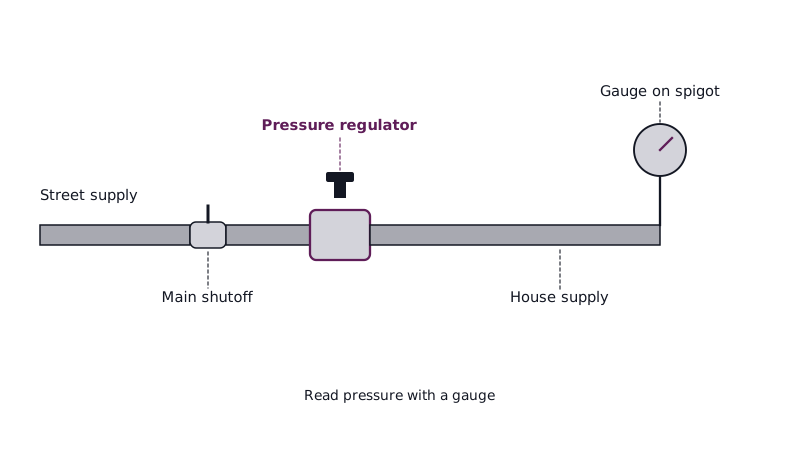
Look for a bell-shaped brass valve near the main shutoff: that is the regulator, and the 3/4 inch version brings street pressure down to something the house can safely handle. Its size matches the supply pipe it sits on. When your pressure runs high, runs low or swings, this part is the suspect, and our low water pressure page puts it in context.
What does a pressure regulator do, and what is the 3/4 measuring?
It reduces and steadies incoming pressure using a spring and diaphragm, so fixtures, hoses, the water heater and appliances see a lower, constant pressure. The 3/4 refers to the inlet and outlet connection size in inches. A 3/4 valve goes on a 3/4 inch pipe. Other homes use 1/2 inch or 1 inch lines, so check before you buy.
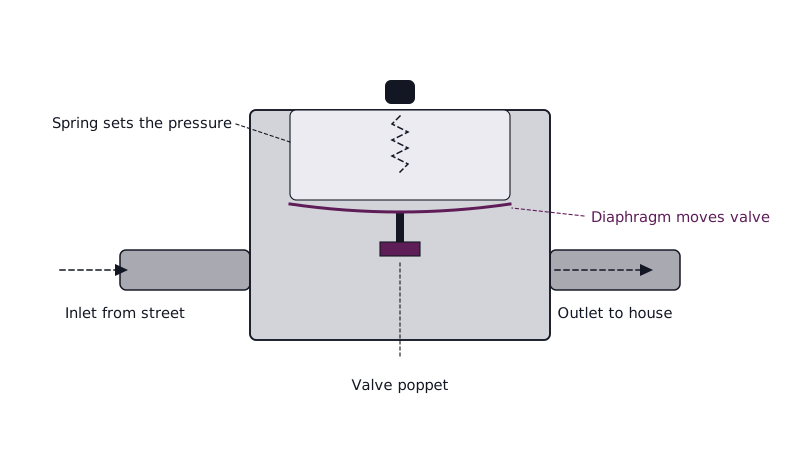
Measure the pipe rather than trusting memory. Wrap a string around it and compare to a pipe-size chart, or ask a plumber. Fittings can differ too: threaded, sweat (soldered) or compression, and the new valve has to match or need adapters. Some regulators have a bypass or built-in strainer, and some include a union to ease swapping.
The target is a pressure that is high enough for good flow and low enough to protect plumbing. The plumbing code in California limits house pressure to 80 psi, and many regulators ship set below that. The plumber can tell you what the valve should deliver.
Can I replace the regulator myself?
A handy owner can, but it is plumbing on the main supply, and mistakes flood the house. You would shut the main, drain the line, remove the old valve by cutting or unscrewing it, put the new one in facing the right way (there is an arrow), restore water slowly and set the pressure. If anything is corroded or soldering is needed, hire a plumber.
A contractor license is needed in California above a small dollar threshold or when a permit applies, and only your building office can say whether a swap like this needs one. The City of Murrieta lists Building and Safety on 951-461-6062 and Wildomar's counter on 951-677-7751. Riverside County covers unincorporated French Valley and Winchester, and San Diego County covers Fallbrook, Rainbow and De Luz.
Keep the details for later: brand, model, size, set point. If your valve has a bypass or an integral strainer, note that too. A plumber replacing it may also check the water heater, thermal expansion and an expansion tank, see water heater pressure regulator and expansion tank replacement.
Where is the regulator, and how do I read my pressure?
Start at the entry point of the water line. The regulator often sits just beyond the main shutoff, at the front of tract homes, inside a garage wall, or beside the water heater. It looks like a bell, topped with an adjusting screw and locknut. Some homes have none, or have one in an underground box at the meter.
To read pressure, thread a gauge onto an outdoor hose spigot or a washing machine valve, confirm nothing is drawing water, then open it. Anything above 80 psi is too high. Under about 40 may feel weak. Check it at different times, since pressure moves with demand through the day.
For a fuller walk-through, read about locating the regulator and adjusting it. Adjusting a valve is a quick job on a good unit, though an old, leaking valve is better replaced.
How can I tell a 3/4 regulator is wearing out?
Watch for banging pipes on shutoff, a toilet that keeps refilling, dripping faucets, a hiss or whine at the valve, pressure that creeps up overnight, a water heater relief valve that discharges, or weak flow that does not match the street. A gauge reading far from the set point gives the answer. Regulators wear out with age and grit.
A regulator that has failed may pass full street pressure into the house, which stresses hoses, supply lines, shutoffs and the heater. That is a common hidden cause of leaks and high bills, see what makes a water bill high and water hammer sound. It can also fail the other way and starve the house, see sudden low pressure.
Hard water adds grit and scale inside the valve. Third-party estimates generally rate Murrieta tap water moderately hard to hard, so a regulator working in these conditions can foul earlier than expected. Your district's report has the real numbers, and the bill tells you which district serves you. In Murrieta that is often Eastern Municipal Water District, with parts served by other districts.
How should I compare a quote for a replacement?
Ask for the brand and model, the pipe size and connection type, the set pressure, whether a gauge is fitted after install, who deals with any permit, and what follows if the old shutoff refuses to close. A good quote lists parts and labor separately. We publish no price here because we have not sourced one for Murrieta.
Pricing is covered by cost structure on regulator installation cost, and the job itself on regulator replacement. Also ask if the main shutoff should be swapped in the same visit, since an old gate valve that fails to close completely is a risk. Plumbers often suggest a ball valve upgrade.
If you want a visit arranged, ask for a price. The plumber home page carries the complete list of services.
Common questions
Which pressure should I choose for my regulator?
Plenty of homes do well at 50 to 60 psi, which gives good flow without stress, but the right figure depends on fixtures and the home. The code limit is 80 psi. Ask the plumber to set it with a gauge and note the figure for you.
What is a regulator's lifespan?
No fixed life exists. A common claim is somewhere around 10 to 15 years, shorter when grit or very high pressure are involved. A gauge check once a year catches a drifting valve before it damages anything. Replace it if pressure creeps up or the valve leaks.
Is a 3/4 valve the same as a 3/4 inch main line?
Yes, the size describes the pipe it fits. Some homes have 3/4 inch copper service lines, and others have 1 inch lines. Larger homes, long runs or irrigation often use 1 inch. Confirm your pipe size before ordering, and ask whether an adapter is needed.
Do I need a regulator at all?
If your street pressure is below the 80 psi code limit it may not be required, but many districts deliver higher and a regulator protects the house. A gauge reading tells you. Some homes have one in an underground box, so ask before you assume there is none.
Last changed