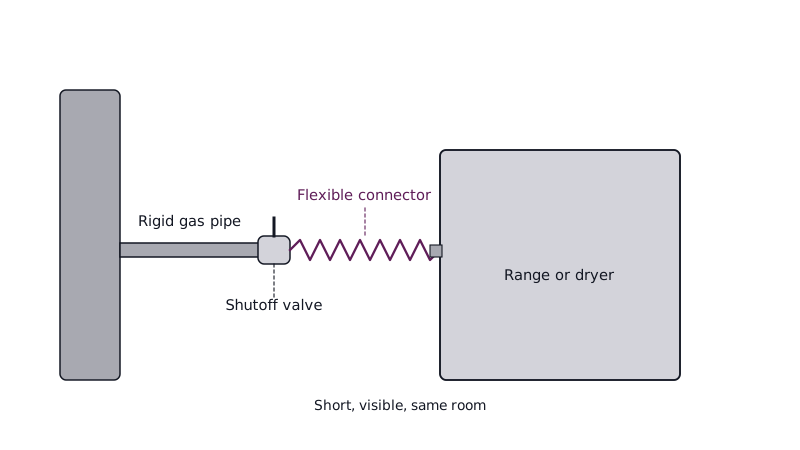
A corrugated connector like this links the rigid gas pipe to a range, dryer or water heater. It is a short, visible last connection, not a way to carry gas through walls or across a yard. Gas work needs a contractor, as our help with gas lines explains.
What is a flexible gas line used for?
A flexible gas line is used where an appliance has to be moved or vibrates slightly, for example a range that slides out, a gas dryer or a water heater. The line extends from a shutoff valve on the rigid pipe to the appliance inlet. The size, such as 1/2 inch, is its connection size and affects the gas it can carry.
Appliance connectors are listed for that purpose only. They are generally meant to stay in the open and in the same room as the appliance, not pass through a wall, floor or ceiling, and not run outdoors unless the product says so. Follow the manufacturer's label, and when an appliance is moved or replaced, swap out any connector showing kinks, corrosion or age.
Capacity matters. A 1/2 inch connector may be fine for a dryer or range and too small for a large tankless heater that needs a large gas flow. A contractor calculates the combined demand of all the appliances on that line. That is why a bigger line is sometimes needed when a tankless heater goes in, as covered on gas tankless installation.
Which kind of pipe carries natural gas inside a house?
House gas piping is commonly black iron steel pipe with threaded fittings, or corrugated stainless steel tubing, often shortened to CSST, which is flexible and installed by trained contractors following the manufacturer's rules, including bonding. Underground runs often use coated steel or polyethylene made for gas. Copper is limited, and local rules decide what may be used.
The pipe type depends on the building, the local code and the gas utility's requirements. Flexible appliance connectors are a different product from CSST house piping, and should not be mixed up with it. Ask a plumber which product is proposed, why, and whether it matches the code your building office enforces. More background is on the residential gas piping codes page.
For anything involving a pipe change, a permit and inspection are normal. Never swap pipe type yourself, because joints, sealants and supports are all specified for each material.
How do the rules treat outdoor gas lines and burial depth?
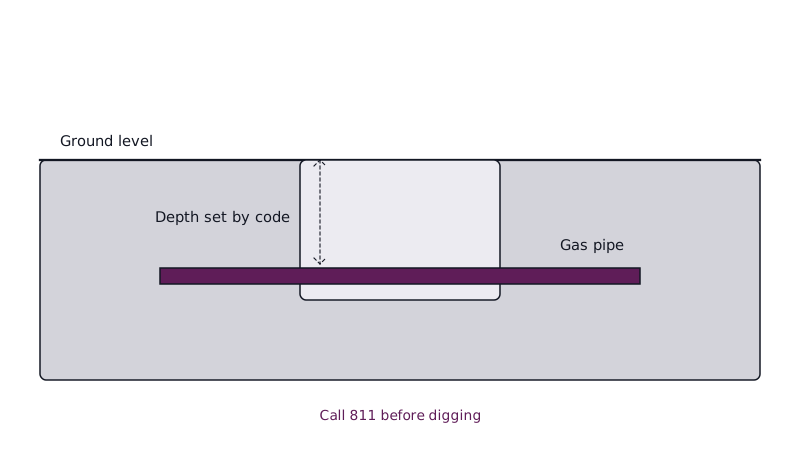
Outdoor and underground gas piping is governed by the adopted California Plumbing Code and local amendments. They cover pipe material, protection from damage, burial depth, shutoff valves and testing. We do not state a depth here because the exact figure should be confirmed with your building office and the plumber. Ask them to cite the code section.
The right office depends on your location. Murrieta's Building and Safety Division answers at 951-461-6062, and Wildomar Building and Safety at 951-677-7751. Riverside County Building and Safety covers unincorporated parts of French Valley, Winchester and nearby areas, and county-listed contacts should be confirmed before you visit. San Diego County covers Fallbrook, Rainbow and De Luz.
Before any digging, call 811 so buried utilities are marked. A pipe laid too shallow, or in the wrong material, can fail or be damaged by landscaping and is expensive to redo. A plumber who handles outdoor lines should be able to describe the route, depth, trench and inspection steps in writing.
Is it possible to add a gas line to a mobile home?
Gas piping and connections inside a manufactured or mobile home count as regulated work, so use a contractor who holds the proper California license, with a permit where required. These homes have their own connection rules, and the gas supply is often at a park meter or a tank. Do not improvise with a flexible hose.
Manufactured home connectors are listed products with specific lengths and fittings, and should come with instructions. Home belly access, supports and protection from damage also matter. For a home inside a park, the management may set requirements of its own, so ask them before planning the work. A plumber can say what the home needs and whether the line size suits the appliances.
A gas smell in any home means getting out right away. Once outdoors, phone SoCalGas on 1-800-427-2200, and call 911 should anyone be at risk. Keep clear of switches, phones and flames indoors.
When does the law reserve gas line work for a contractor?
A contractor license is generally required in California when labor and materials total $1,000 or more, as well as for each job that needs a permit. New gas piping, moving or extending a line, and replacing a gas water heater, generally need a permit. DIY advice ends there: this page explains what the parts are, not how to install them.
You can look up a contractor on the CSLB website. Ask for the license number, the permit plan and the inspection steps. A written quote should name whoever obtains the permit and list what is tested at the end, such as a pressure test of the new piping. Keep the inspection record with your house papers.
Replacing a flexible connector alone is a smaller job, but the shutoff valve, the fitting type and the leak test still matter. When in doubt, phone a plumber instead of guessing, because a small leak can be invisible.
What are the safety points for a gas line?
Know where the shutoff is, place a carbon monoxide alarm near the sleeping areas, never hang anything on gas pipe, and replace damaged connectors. Test fittings for leaks only in the way the manufacturer allows, never with a flame. If you smell gas, leave first and phone SoCalGas from outside.
One more habit worth adopting is regularly inspecting the connectors behind the range, dryer and water heater, since they sit in the dark and get bumped when appliances move. A cracked or rusted connector is a reason to call. Do not use the appliance until it has been checked.
To have a local plumber visit, fill in the price request form; requests go from us to nearby plumbing companies that pay us a fee, and each gives its own quote. What drives the price is explained in gas line cost, and the home page shows where we cover.
Common questions
Is a flexible gas line safe to use behind a stove?
When it is the right listed connector, undamaged, properly sized and connected to a shutoff valve, yes, that is its normal use. Replace it if it is kinked, corroded or pulled when the range moves. A plumber should check the connection and test for leaks.
Can a flexible gas line run through a wall?
No. Appliance connectors are generally not allowed to pass through walls, floors or ceilings. Going through a wall calls for rigid pipe or approved tubing, put in by a contractor under a permit. Read the product label and have the plumber verify what the code allows.
What size gas line does an appliance need?
It depends on the appliance's gas input, the length of the line and what else is on it. A dryer or range needs far less than a tankless heater. A plumber sizes the pipe from the loads, and the size on a connector is not a guide to the house line.
Who do I call if I smell gas?
Get out of the building first, then ring SoCalGas at 1-800-427-2200 from the yard, and use 911 if anyone is at risk. No switches and no phone calls indoors. A plumber is not the first call. Repairs by a contractor can follow once the utility has cleared the line.
Last changed