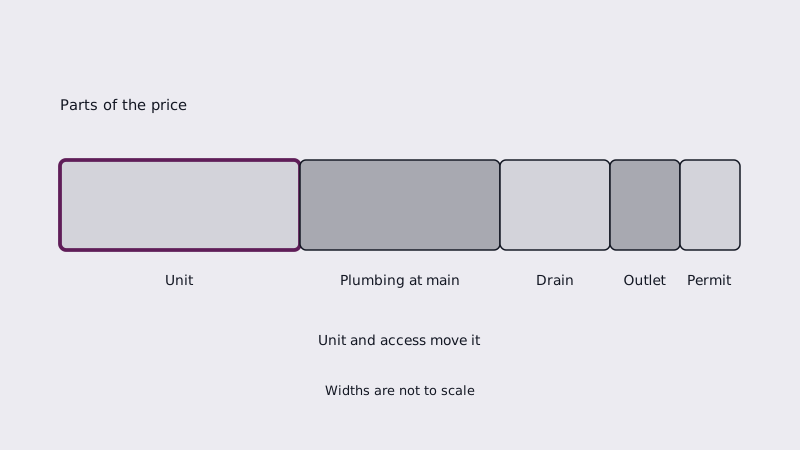
The installation price of a water softener in Murrieta comes from four things: the softener unit itself, the plumbing needed to place it, the drain and electrical connection, and any permit or extras. Because the unit and the access cause the biggest swing, the only reliable number is a written quote given once someone has seen the house. No sourced local figure exists, so none is printed. The plumber for softener installation page explains how the job runs.
Below is a guide to reading any softener quote. It splits the total into lines, tells you which are fixed and which depend on your house, and explains why a big-box retailer's quote and one from a local plumber may not cover the same thing.
What goes into the price of installing a water softener?
Six lines make up most quotes: the unit (tank, resin, control head), the bypass and plumbing connections, the drain line for regeneration water, a nearby electrical outlet, labor, and a permit if one applies. Add haul-away or a salt delivery if included. Units vary widely, and labor depends on how far the softener sits from the main line.
Layout matters most. A softener beside the garage water heater, with a floor drain a few feet away, is the simple case. If the best spot is across the house, the plumber needs more pipe, a longer drain run and sometimes a new outlet.
Ask whether a hardness test of your water comes with the quote, ahead of the unit being sized. Sizing rests on household use and the grains-per-gallon reading, and an oversized unit wastes salt and water.
Does hardness affect the cost?
Hardness affects which size you need, not how long the plumber stays, and a bigger tank or a metered head can raise the unit price. Third-party estimates, based on 2023 to 2025 reports, put Murrieta tap water at roughly 6 to 11 grains per gallon, a range that falls between moderately hard and hard. Your address may differ, so read the report published by the utility that bills you.
Eastern Municipal Water District, Western Water's Murrieta Division or, in parts, Rancho California Water District may supply Murrieta customers, so the bill tells you which report to read. A cheap test strip gives a rough reading, though the water quality report published by the district is more precise.
In Rainbow, one district report listed about 15.6 grains per gallon (2021), so harder water in that area may need a larger unit. Before sizing anything, look up the latest report from your own district.
Do a pre-plumbed loop or a particular brand affect the price?
Some homes were built with extra pipework, called a loop, so a softener can be hooked up later. Where one exists, installing costs less because most of the plumbing is already in place. Brand mostly changes the unit, the warranty terms, and whether the dealer insists on its own installer. Culligan, Kinetico, Rheem and retailer brands each have their own packages.
Some dealers sell a unit and quote installation as a bundle, others sell the unit and let you hire your own plumber. Retail chains often advertise an installed price that assumes a standard setup, with extras charged if your plumbing does not match.
Ask in writing what is included: bypass valves, a drain air gap, a brine line, the hose, flexible connectors, and what happens if the existing pipes need repair. If the dealer's installer finds copper in poor shape, who pays?
How should I compare two quotes?
Put them side by side, line by line. Check the model and capacity, the install labor, the drain method, the permit, the warranty on the unit and on the labor, and the service plan. A lower total may leave out the permit or the drain. Ask each one to confirm the grain rating they sized for.
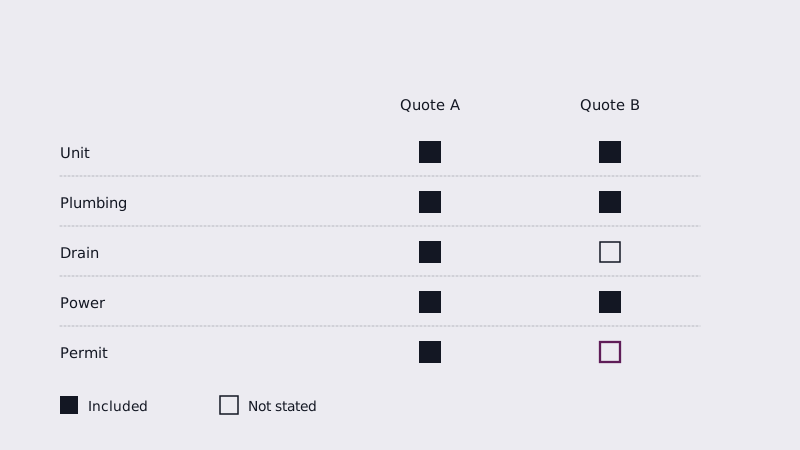
A simple table helps:
| Line | What to ask |
|---|---|
| Unit | Make, model, grain capacity, control type |
| Plumbing | Pipe material, bypass, distance from main |
| Drain | Air gap, floor drain or standpipe |
| Power | Existing outlet or new one |
| Permit | Who pulls it, whether it is included |
| Extras | Salt, haul-away, first service |
If two quotes differ by a lot, find the line that explains it before choosing the cheaper one.
Are there rules about salt-based softeners in California?
Yes, they can apply. California law lets local agencies restrict self-regenerating softeners where salt in the wastewater is a problem, and some districts do. Whether your district limits them depends on where you live, so ask the water district and the city before you buy. A permit or a rebate form may also come into play.
Rules and rebates change, so the supplier's current page is the source. Drought rebates sometimes apply to efficient appliances, though not always to softeners. Ask before you buy, not after.
Salt-free conditioners exist, but they work differently: they alter scale rather than remove minerals, and results are debated. If an alternative is on your quote, ask what evidence the seller has.
To follow the steps of an install, see the softener installation walkthrough and the installation service.
Does a softener change the water bill later?
Slightly, in either direction. Regeneration uses water and salt, so a softener adds to usage, while softer water helps appliances and fixtures last, and scale prevention can save on repairs. Our pages on whether a softener raises a water bill, preventing hard water scale and scale removal cover this.
Also see the whole-house cost page for a different angle on the same expense.
Once you submit the form below, your request goes to a nearby plumbing business, which quotes the job and does the work and pays us a fee for the introduction. This site does neither. From the Murrieta Creek Plumbing home page you can compare other jobs.
Common questions
Why do two quotes for the same softener differ?
Usually because they assume different plumbing. One may include a new drain and outlet, the other may assume they already exist. Warranty on labor, the permit and the first salt can also differ. Ask both contractors to list inclusions and exclusions on paper, then compare like for like.
Is a cheaper installation always a worse one?
Not always, but check what has been left out. A low number can mean a standard setup with extras billed later. Find out if the price shifts when the plumber comes across old pipe, and make sure the quote names the work in writing.
Is it worth installing a softener on my own to save money?
Some owners do the plumbing, but a poorly set drain line can flood a garage, and an unpermitted job may complicate a home sale. In California a contractor license is generally needed once labor and materials total $1,000 or more, and for any job that requires a permit. Ask your city or county before starting.
Does a bigger softener cost more to install?
The unit itself costs more, while the labor is often similar. A larger tank takes more floor space and sometimes a sturdier drain connection. Size the softener by your hardness and the household's water use, not by what looks impressive on the showroom shelf.
Who pays for salt after the install?
You do, as a running cost. Ask the installer how much salt the unit is likely to use at your hardness and household size, and whether the written quote covers the first load of salt, which avoids surprises during the first month.
Last changed