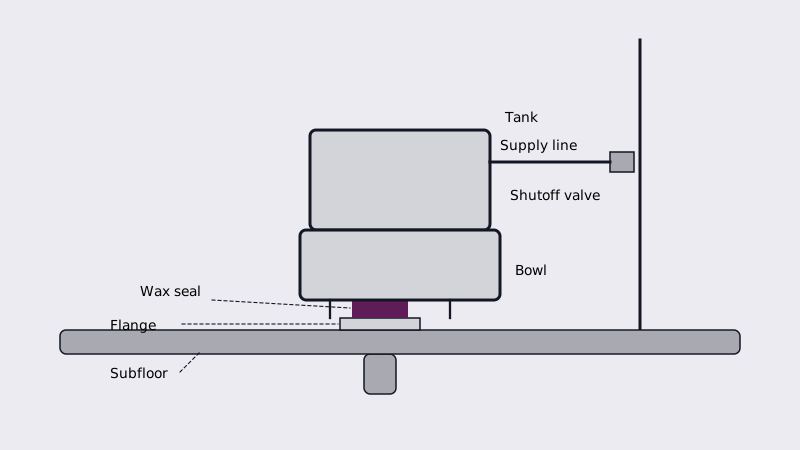
We do not print a dollar range for toilet replacement here, because we have not read a source we can stand behind for Murrieta, and a guessed number helps nobody. The most we can offer is the shape of the price: the toilet, the labor, disposal, parts and surprises. A plumber quotes the real total after seeing the bathroom. For repairs short of replacement, start at toilet repair.
What makes up the price of replacing a toilet?
Four things set the total: the toilet you choose, the labor to take out the old toilet and install the new one, small parts such as a wax seal, bolts and a supply line, and any repair the plumber finds underneath, like a rotted floor or a damaged flange. Of these, the toilet itself and hidden damage swing the number the most.
A simple table shows where the money goes:
| Line on the quote | What it covers | What moves it |
|---|---|---|
| The toilet | Bowl, tank and seat, one-piece or two-piece | Brand, height, flush system, whether you buy it or the plumber does |
| Labor | Shutting water, removing, setting, leveling, testing | Floor level, tight space, how many toilets |
| Parts | Wax or foam seal, bolts, supply line, shutoff valve | Old valves that will not close need replacing |
| Disposal | Hauling the old porcelain | Stairs, distance, sometimes included |
| Repairs | Flange, subfloor, drain | Only if found |
If one quote lists these and another gives a single figure, ask the second to itemize before you compare.
What does a plumber usually charge to fix a toilet, versus replacing it?
Fixing a toilet costs less than replacing one whenever the fault is a flapper, fill valve, supply line or seal, since those parts are small and the visit is short. Replacement costs more because you buy a fixture and pay for removal. The cheapest choice is usually the repair, unless the porcelain is cracked or the model wastes water.
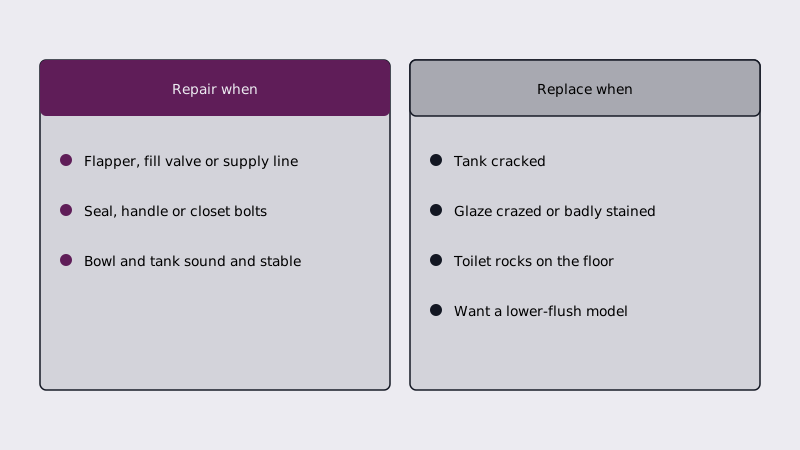
Ask for both options on one visit. A plumber who sees a running toilet and a good bowl should price the repair first. A cracked tank, crazed glaze, or a badly stained and unstable toilet means replacement wins, and so does wanting a lower-flush model. Newer toilets in California generally use no more than 1.28 gallons per flush, which can cut water use compared with older fixtures. A silent leak into the bowl is a likely waste source: the EPA figure for a typical household leak is above 9,300 gallons yearly.
How much does the labor cost, and does a handyman cost less?
Labor depends on the plumber's rate, the time on site and any minimum charge, and plain swaps may cost less with a handyman. California limits who can do what: a job that needs a permit, or that runs above a small dollar threshold, requires a contractor license, so a handyman is limited to small jobs. Ask which case applies, then check the license status through the state board's own site.
For toilets alone, a replacement is commonly a short visit, and what pushes it longer is the surrounding condition: a stuck closet bolt, a floor that is not level, a flange sitting below the floor surface, or a second-story bathroom. If a flange repair is needed, the plumber should tell you before doing it and add it to the quote.
Hourly rates differ between businesses and between weekday and after-hours calls. For how plumbers price time generally, see plumber hourly rates, and for what a clog visit costs, see unclogging a toilet.
How is a handle swap or small part priced?
Replacing a toilet handle is a small fix, often a parts-and-a-few-minutes job. A side-mount handle bolts through the tank wall with a nut, and a loose or snapped lever is the usual reason. Many people handle it themselves: the part is cheap, and the tank only needs partial draining. Should the tank leak at the handle hole, the plumber may replace more.
Small parts bundled with a visit usually cost less than a separate call. If the toilet runs or leaks, look at replacing a flapper and replacing a fill valve, because a handle swap on a running toilet will not stop the running.
Is it worth setting a toilet on my own to cut the bill?
You can, if the flange is sound, the floor is level and you can lift the bowl, which is heavy. The savings are labor and a hauling fee. The risk is a bad seal that leaks into the subfloor slowly, which costs far more than the labor you saved. If anything under the toilet looks damaged, stop and get it checked.
If you try it: close the supply, flush, sponge the tank and bowl dry, detach the supply line, remove the nuts and lift. Scrape the old seal off the flange, set a new seal, lower the bowl straight down, tighten the nuts alternately, then reconnect and test for leaks. Do not over-tighten, since porcelain cracks.
Our guide on toilet repair says where DIY stops.
What if the whole plumbing system in an old house needs replacing?
If you are looking at pipes beyond a toilet, replacing plumbing in an older house is a different job, priced by the house, not by the fixture. Walls open up, pipe type changes, and permits and inspections apply. Costs depend on size, material, access and how much patching the quote covers.
Older homes sometimes have galvanized steel, which corrodes inside, or polybutylene, which has a failure history. Murrieta's housing is mostly newer, with a median build year around 2000 in third-party census summaries, so many homes here may have neither, but older pockets could. If a plumber suggests a replacement, ask what condition they found and why. See replacing galvanized pipe and repipe timing.
Common questions
How long does replacing a toilet take?
An uncomplicated swap usually fits into one brief visit, and the quote should name the expected time. Extra time comes from a corroded shutoff valve, a stuck bolt, an uneven floor or a damaged flange. Plan on the bathroom being unavailable for part of the day.
Will a new toilet fit where the old one sat?
Check the rough-in, which is the measurement from the center of the floor drain back to the finished wall. Twelve inches is the most common, but 10 and 14 exist, and a mismatch means a different model. Measure before you buy, and let the plumber know the result if you supply the fixture.
Does buying the toilet myself save money?
Sometimes the sticker price is lower at a store, but a plumber may decline to warranty a part supplied by someone else, and the wrong rough-in or a missing seal can mean a second trip. Ask the plumber what they prefer, and ask for the toilet line on the quote so you can compare.
Prices are one part of the job: the plumber guide for Murrieta covers the rest.
References
- California Contractors State License Board
- EPA WaterSense, household leaks (more than 9,300 gallons a year)
Last changed