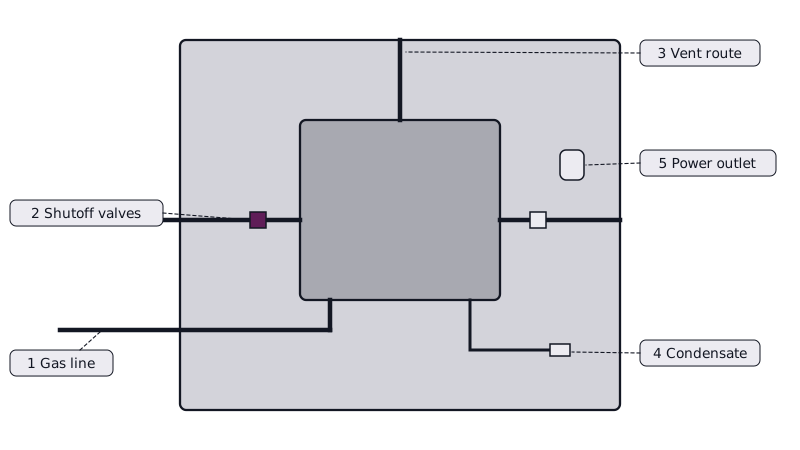
A Navien tankless water heater is a condensing unit, which changes the install compared with a tank: plastic or special venting, a condensate drain, an electrical outlet and, in many houses, a gas line of greater size. The price swings with those details more than with the unit itself. It sits within the wider water heater repair and replacement work a local plumber handles.
What does a Navien tankless installation involve?
The plumber mounts the unit, runs new or revised gas, cold and hot water lines, installs isolation valves for future flushing, connects a vent for exhaust and intake air, runs a condensate drain, provides power, programs the unit and tests it. Then the permit inspection is arranged.
A swap from a tank usually moves the heater from a garage corner to a wall, which needs new supply lines. Tankless units are compact and mount on a wall indoors or outdoors, depending on the model, so location is part of the plan. Ask what is included in the quote: valves, venting, condensate neutralizer, permit and old tank removal.
Is a larger gas line needed for a tankless heater?
Often yes. At any one moment a tankless unit pulls far more gas compared with a tank model, which means the pipe has to carry its peak burn rate on top of every other appliance on that run. The plumber measures the pipe length, works out the size, and may enlarge part of the line.
Gas piping work in California needs a contractor with a license, plus a permit. For the details, see gas tankless installation and in the page on home gas piping rules. If you ever smell gas, leave first. Once outdoors, ring SoCalGas at 1-800-427-2200, and dial 911 if you feel unsafe.
How does a condensing unit vent, and where does the condensate drain?
A condensing unit extracts more heat from its exhaust, so the vent runs cooler and is usually plastic pipe of a type the manufacturer approves, sealed and sloped. The condensate is a mildly acidic liquid, and it goes first through a neutralizer cartridge, and from there into a floor drain or a laundry standpipe.
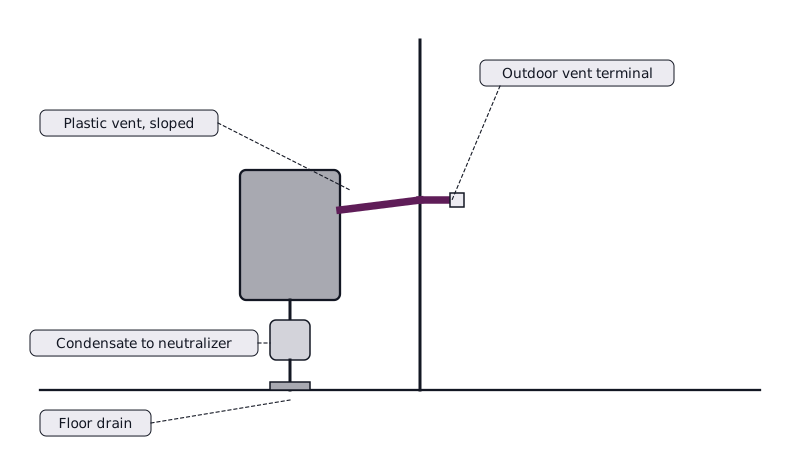
The vent route decides a lot. A short run out an exterior wall is simple, and a long run through an attic adds labor. Vent length limits and clearances come from the manual, and the plumber must follow it. Poor venting is a common cause of error codes later, so cheap vent work is not where to save.
Will it fit what you have now: water, power and space?
It needs a nearby electrical outlet for the controls and fan, cold and hot water lines, and enough clearance around it. An existing tank closet is often too tight for venting. A minimum flow is also required before many tankless units will light, so very low-flow fixtures can cause cold spots.
Water hardness matters. Murrieta tap water is rated moderately hard to hard in third-party estimates, around 6 to 11 grains per gallon, and your address may differ. Scale shortens a tankless heater's life, so plan isolation valves and think about a softener. How a softener is installed lays out the plumbing.
Does a Navien installation in Murrieta need a permit?
Yes in general, since California calls for a permit on both a water heater replacement and a gas piping change. Murrieta permits are handled by the Building and Safety Division, Wildomar has its own building office, and unincorporated areas use Riverside County. The plumber should pull the permit and arrange the inspection.
For the City of Murrieta, Building and Safety lists 951-461-6062. Check which rules cover your address before work begins. Skipping the permit may cause trouble with insurance and with selling the house later, and the inspection checks gas, venting and seismic strapping where it applies.
Does a tankless unit suit your house?
It can, for households that run out of hot water or lack space, though not for everyone. The unit costs more up front, the install is more involved and scale needs yearly attention. How much you save turns on your hot water use.
Tank versus tankless offers a fair comparison, and what moves the price is covered in tankless installation cost. If the heater you have fails today, see emergency water heater repair before deciding.
What happens after the install?
The plumber should walk you through the display, show the isolation valves, set the temperature, and tell you the flush schedule. Keep the manual and the permit sign-off. Navien units can report codes and some link to an app, so ask how yours does.
If the unit later fails, the plumber who installed it knows the setup. For brand repair details, see Navien tankless repair.
Common questions
What is the usual time needed to install a Navien?
Swapping in the same location can take a day, while moving the unit, running a new vent or enlarging the gas line can take longer. The permit inspection may fall on another day. Get a schedule from the plumber, including when hot water will return.
Can a Navien go outdoors?
Some models are rated for outdoor use and some are indoor only, so the model must match the location. Outdoor placement avoids a long vent, but in freezing weather needs protection. Ask which model fits your wall and exposure, and check the manual before buying.
Does the existing water heater strapping matter?
California requires water heater strapping in the seismic setting for tank heaters, but a wall-mounted tankless unit is secured to the wall by its bracket. The plumber handles this during a replacement. Ask what the inspector will check on your install.
Do I need a recirculating line?
Not required, but it shortens the wait for hot water at far-off taps. Some units have a built-in pump or buffer option, and some need a dedicated return line. It adds cost and complexity, so ask the plumber whether it helps in your layout.
Who does the installation if I send a request here?
A local plumbing business does it. Complete the quote page and we hand your request to a business that pays us a fee for the lead. Nobody at this site is a plumber. More is under how it works, while the home page shows other jobs.
Last changed