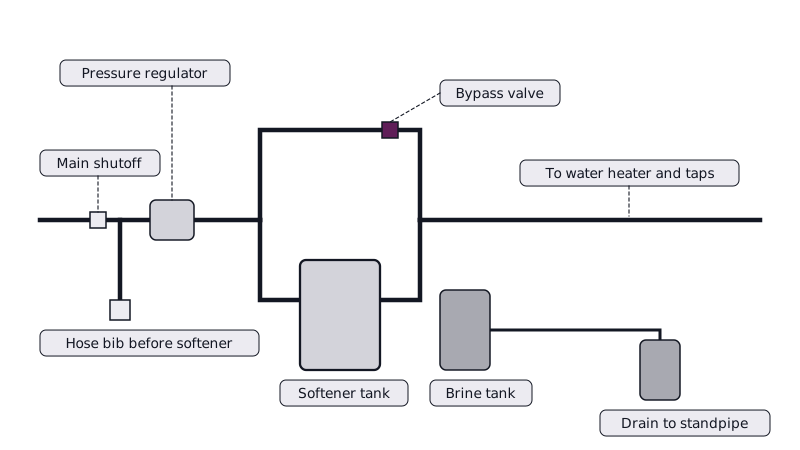
Installing a softener means placing a resin tank on the main water line downstream of the shutoff and upstream of the water heater, together with a bypass, a drain that takes the regeneration water and an outlet for its controller. The whole job is mostly cutting in two fittings and running a drain line. The details of the softener installation service decide the quote.
Which spot in the house suits a whole-house softener?
Put it on the main supply line after the shutoff and the pressure regulator, ahead of the water heater and every indoor faucet, with a branch for the yard hose bib taken off before the unit. The spot needs floor space, a nearby drain and an outlet, so most are in a garage, a side yard enclosure or a utility closet.
Outdoor hose bibs and irrigation are usually left on unsoftened water, because turf and plants do not like salty water and you do not want to burn through salt on a sprinkler. A plumber will tee those lines off ahead of the softener, which is one of the first things to confirm on a quote.
Check the clearance. The resin tank and brine tank together occupy about the floor area of two small trash cans, and someone must be able to reach the control head for service. Cramped garages in newer Murrieta tract homes sometimes need the unit mounted away from the wall where the main enters.
Do you really have hard water in Murrieta?
Almost certainly some. Third-party estimates published for Murrieta tap water put it roughly between 6 and 11 grains per gallon, meaning moderately hard to hard, and the figure for your address may differ. The water comes from one of a few districts, most often Eastern Municipal Water District, so the bill tells you which.
Do not trust a showroom number. Use an inexpensive test strip at the kitchen tap, or read your district's yearly water quality report. Scale on showerheads, white crust on faucets and spotted glasses are the visible signs. If your reading is only a few grains, a softener may be more than you need.
Rural homes on a private well, which sit outside any district supply, can read far higher or lower, and iron can foul resin, so get the well water tested first.
What happens step by step during the install?
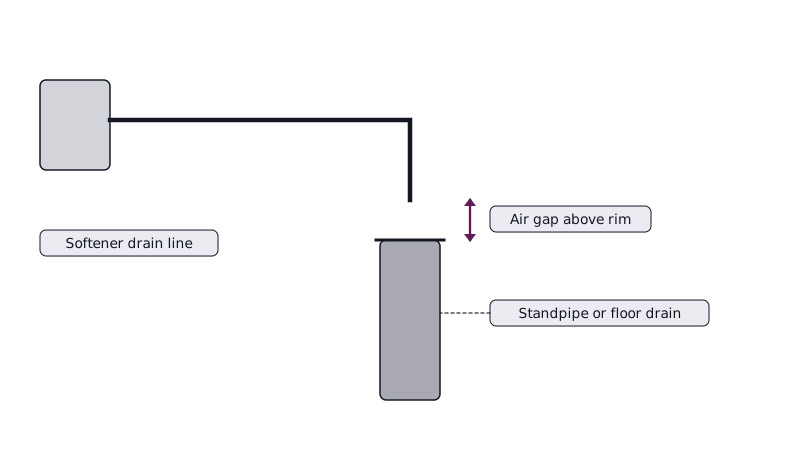
Shut the main off, drain the line, cut the pipe and fit the bypass assembly. Next, connect the softener to the inlet and outlet pipes, then route a drain line into an approved floor drain or standpipe, keeping an air gap at the end. Then fill the brine tank with salt, plug in the controller and set the hardness. Flush the system and check for leaks before water goes back to normal.
For a copper line the plumber solders or uses push fittings, and for a PEX line, crimp or expansion rings. The bypass valve lets you isolate the softener for repairs while water still reaches the rest of the house, which is why it is not an optional extra.
Pay attention to the drain. The regeneration cycle pushes salty water out of the tank, and that water must reach a drain protected by an air gap, not a hose dangling behind the washer. Many installers get this wrong when they rush.
Can you install a softener yourself?
A confident DIYer with push-fit connectors and a drain nearby can do it, but there are catches. If the work needs soldering, modifying supply lines or a permit, the city or county building department gets a say, and California generally expects a contractor license when the job grows beyond a certain size.
In practice the DIY risk is a leak inside a wall or a backed-up drain. Do not cut into the main without knowing where the shutoff is and whether the pressure is under 80 psi. For homes on septic systems, ask a professional before sending softener brine to the tank, because it can disturb it. If in doubt, hire a local plumber for the pipework and do the controller setup yourself.
Does your district restrict softeners?
Some California water agencies limit salt-based self-regenerating softeners because the brine flows to the sewer and contaminates the recycled water supply. No rule has been confirmed by us for each Murrieta, Wildomar or Canyon Lake district, so ask your supplier's customer service before buying; the bill shows who that supplier is.
Alternatives exist: a salt-free scale conditioner, which does not remove hardness but changes how scale forms, or a plumber-installed filter for just the water heater. They do not give the slick feel of true softened water, but they have no brine discharge. Pick based on what your district allows and the problem you are solving.
How much does it cost, and what does it save?
It depends on the unit, the length of pipe and drain run, and whether the water line is accessible. We have no verified Murrieta price figures for this page, so go to softener installation cost for the factors and the whole-house cost breakdown, then get a written quote.
Savings are real but hard to put in a number: less scale in the water heater, cleaner glass and fixtures, and appliances that last longer. A softener also uses water and salt to regenerate, so before deciding, read about softeners and a higher water bill.
What upkeep does a softener call for?
Keep the salt level in the brine tank above the water line, break up any salt bridge, and check the settings each time a household member changes. Resin lasts for years, but iron or chlorine can wear it faster. Clean the brine tank once a year and check the air gap. Scale already sitting on fixtures is a separate job, which removing hard water scale covers.
Common questions
What size softener does a household need?
Size depends on the number of people, the hardness reading and the flow rate. A rough method multiplies daily water use by grains of hardness to get grains per day, then picks a unit that regenerates every few days. Undersizing means hard water seeping through, and oversizing wastes salt. The installer should show the arithmetic.
How many hours does an installation take?
A typical swap-in runs a few hours when the line is easy to reach and a drain is close, and longer if the drain must be extended or the water line moved. The house is without water for part of that time, so choose a quiet window. The plumber can give a time estimate along with the quote.
Where does the softener drain water go?
To a laundry standpipe, floor drain or utility sink, through an air gap so wastewater can never flow backward into the unit. Never plumb it to a rain drain or the yard. Some districts and septic owners have extra limits, so ask your supplier and the installer which drain is allowed in your neighborhood.
Is scale left in place also hard on the pipes?
Yes, scale constricts pipes and coats tankless heat exchangers and heating elements, which lowers efficiency and shortens heater life. A softener or conditioner cuts the build-up from here on. Whichever route you choose, hard water scale prevention lists habits that help.
Who does the work if I send a request?
This site gives the request to one nearby plumbing company, and that company pays us a fee for the introduction, sets the price and does the installation. We do not employ the plumber. Use the quote page to send details, or see how it works.
The rest of our guides start from Murrieta plumber.
Last changed