Most burst pipes in a Murrieta home start as something small that nobody checked: a regulator that drifted, a braided supply hose that is eight years old, a shutoff valve that has never been turned. The routine below takes about twenty minutes and a pressure gauge. It pairs with our broader guide on leaks and bursts, which covers what to do once water is already escaping.
What actually makes pipes burst in Murrieta?
Four causes do most of the damage here: water pressure beyond what the plumbing was designed to handle, aging pipe and fittings, rubber or braided hoses that fail without warning, and an occasional hard freeze in cold spots. Freezing matters less than in colder states, so pressure and age are the usual suspects.
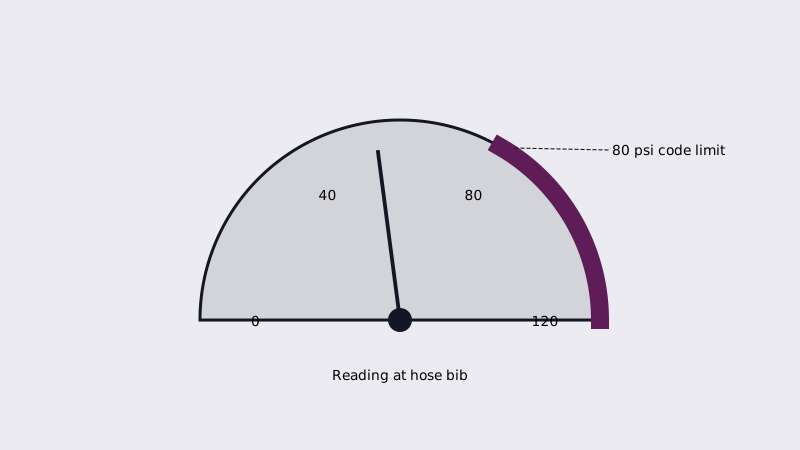
Water arriving at a house from the street can run well above what fixtures like. The California Plumbing Code sets a limit of 80 psi, and a regulator close to the main is meant to keep the house below that figure. Regulators wear out, and few owners know where theirs is. Our page on the causes of pipe bursts goes into each cause in more depth.
Winter nights in the valley can come close to freezing at times, and open rural lots further out can sit colder than tract streets. An exposed hose bib or an irrigation riser with no insulation is the typical casualty.
How do you check your water pressure?
Screw a pressure gauge onto an outdoor hose spigot, then turn the water on. Take the reading early in the morning or late at night, when neighbors draw less water. A reading under 80 psi is within the plumbing code limit. Above it, ask a plumber about the regulator.
Gauges are sold at hardware stores for a modest price. Check at several times of day, because pressure moves. A very high reading that falls after a day suggests the regulator is creeping. High pressure shows up as pipes that bang, a toilet that refills over and over, and faucets that spit. Read the notes on water hammer and on adjusting a pressure regulator before touching the adjustment screw, since a wrong turn can make things worse.
What is thermal expansion, and why does it matter?
When a water heater heats cold water, the water expands. If the plumbing is a closed system, the added volume has no place to go, so pressure spikes with each heating cycle, which can pop a fitting or open the relief valve. An expansion tank takes up the surplus. Many homes need one, though it is not always installed.
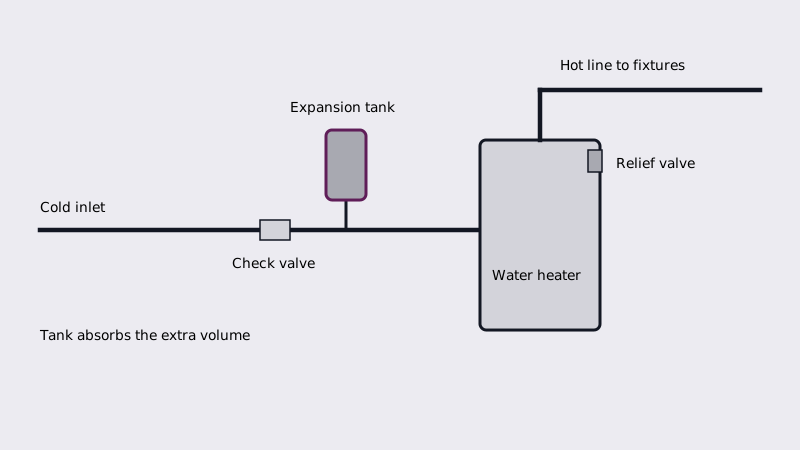
The tell is a dripping relief valve, or a gauge that reads normal in the morning and much higher after the heater has run. Ask the plumber whether the heater has an expansion tank and whether its air charge is right. For the details, read about replacing an expansion tank on a water heater.
Which parts of the plumbing should you replace before they fail?
Replace the braided stainless hoses under sinks, behind toilets and on the washing machine about every five to ten years, the rubber washer hoses sooner, and any shutoff valve that is stiff or weeping. These cheap parts cause a surprising share of indoor floods, and replacement takes minutes.
Look for rust bloom at the crimp ends, bulging, stains on the cabinet floor and white or green crust on valves. A washing machine hose that has been under pressure for years can burst at full house pressure while nobody is home. Turning the washer's supply valves off when you leave for a trip costs nothing. A water heater flex line is the same story; if the label on yours says it was made more than ten years ago, put it on the list.
Does an earthquake gas and water shutoff help?
An automatic gas shutoff protects against gas leaks after a quake, not water. For water, the key is knowing the main shutoff and strapping the water heater, since a heater that falls tears its connections and floods the garage. Strapping is a building-code requirement for water heaters in California.
Once a year, test the main shutoff by closing it, checking that the meter stops, and reopening it slowly. Should the valve refuse to close fully, have it replaced, because the day you need it is the day you do not want to be wrestling with it. For the gas side, see earthquake gas shutoff valves.
What should you do before a trip or a cold snap?
If you will be away longer than a few days, close the main valve, or at the very least the washer supply and the water heater's inlet. Drain outdoor lines on very cold nights, cover exposed spigots and leave the cabinet doors open beneath sinks on outside walls. Do not leave a hose attached to a spigot in a freeze.
If you rely on a well and a pressure tank, as some rural properties around the area do, check the tank's pressure and the pump's cut-in setting at the start of the season. A failing pressure switch can overshoot. Insulate the exposed pipe, wrapped tightly, where it leaves the ground.
For travel, put a camera or a leak sensor under the water heater and under the kitchen sink. Cheap sensors send a phone alert as soon as water appears, which turns a wrecked floor into a mop-up.
How can you distinguish a burst pipe from an ordinary drip?
A burst sounds like a hiss or a rush, or you see water spreading with no fixture to blame. The clearest sign is a meter that is still moving while every fixture is off. Damp drywall, a bulge in a ceiling, or a sudden loss of pressure are others. If you are unsure, shut the main and watch the meter.
Once you are sure it is a burst, shut the main valve first, turn off electricity to the wet rooms, empty the line from a faucet at the lowest point, and then call a plumber. The longer guide on spotting a burst pipe deals with underground and in-wall cases.
Is it time to repipe the house?
Not just because the house is old. Repipe when leaks keep recurring, when pipe inspection shows pitting or wall-by-wall pinholes, or when the material has a known history of failure. Check the date and type of piping first, and ask a plumber to look before assuming the worst. See repiping a house when that point arrives.
Most Murrieta homes were built around 2000 or later, per third-party census summaries, so wholesale repiping is not the first move for many owners. Fixing pressure, replacing hoses and valves, and adding an expansion tank where needed cost much less and prevent most bursts. To have a plumber look, send a request on the price request page. A local plumbing business receives it and quotes the job; those businesses pay us a fee for taking requests. Other services we can pass on are listed on the Murrieta Creek Plumbing home page.
Common questions
How frequently do supply hoses need replacing?
Every five to ten years for braided stainless hoses, and earlier if you see rust, bulges or drips. Rubber washing machine hoses are a worse bet, so many plumbers suggest changing them every few years or fitting braided ones. Write the install date on the hose with a marker so you remember.
Can a pipe burst even when the weather is mild?
Yes. In Murrieta, bursts mostly come from pressure spikes, aged pipe, failed hoses and bad fittings, not frost. EPA figures put the average household's leak loss above 9,300 gallons of water annually. A burst in mild weather usually traces back to a failed regulator or a hose that has outlived its useful years.
Is it worth installing a leak sensor?
Often. Small battery sensors rest on the floor beside the water heater, washer and sinks, then sound an alarm or message your phone. Some pair with an automatic main shutoff valve. They do not prevent a burst, but they cut the damage by flagging it in minutes, which matters most when you are away.
Is it wise to shut the water off before a vacation?
If you will be gone more than a few days, yes, the main valve is the simple choice. If you want to keep irrigation running, shut off the house side only if your layout allows it. Turn the water heater to vacation or pilot setting where the manual says to.
What if the main shutoff refuses to close?
Do not force it. If you can reach the meter valve and your district lets homeowners use it, close that instead, then call a plumber to replace the house valve. Which district bills you, such as Eastern Municipal Water District or another, is shown on your bill, and each has its own rules on the meter.
References
Last changed