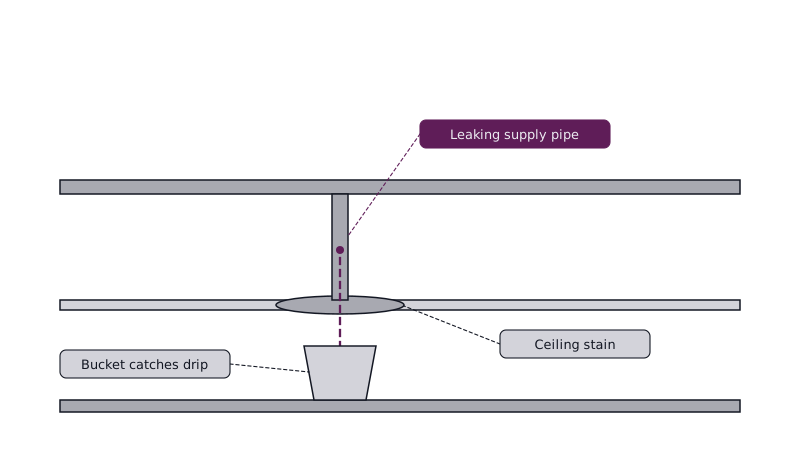
If water is coming through your ceiling, close the main water valve, keep people away from any wet light fixture, switch off the circuit if the panel is reachable and dry, and set buckets under the drips. Then photograph everything and look overhead for the source: a pipe, an air conditioner drain, a shower or the roof. More help is on the plumber for leaks page.
What should I do first when water comes through the ceiling?
Close the main valve to cut the supply, then deal with the electrical risk. Water in a ceiling can reach wiring and light fixtures. If it drips from a light, flip that circuit off at the panel, but only when the floor and panel are dry. If not, stay out and phone an electrician or the utility for help.
In order:
- Water off. Close the main shutoff. If the source is a single fixture upstairs, closing its own valve may be enough.
- Power. Switch off breakers for the affected rooms if safe.
- Contain. Bucket under the drip. A ceiling bulging with trapped water can be relieved by making a single small puncture at its lowest spot above a bucket, which may keep the remaining drywall from collapsing. Stand to the side.
- Protect. Move furniture and electronics, and lift rugs.
- Photograph and note times. Your insurer will want them.
- Do not walk under a sagging ceiling.
This is also the right moment to find out where your shutoff is. If you cannot find it, the burst pipe emergency page can help.
What usually causes a ceiling leak?
That depends on what sits above. With a second floor, the usual culprits are a leaking shower pan or tub drain, a toilet supply line or wax ring, or a dishwasher or washing machine hose. Beneath an attic holding an air handler, the condensate pan or drain line is a frequent source. Beneath a roof, rain.
Quick ways to tell:
- Leak only after a shower or flush upstairs: bathroom plumbing.
- Leak on hot days, when the AC runs: condensate line or pan, particularly if the air handler is in the attic.
- Leak only when it rains: roof, flashing or vent boot.
- Leak all the time, while the meter keeps turning: a pressurized supply line.
- Brown stains in rings: repeated wetting over time.
A plumber suits the first and fourth cases. An HVAC technician handles the condensate system, and a roofer the roof. Do not guess. Our guide to signs of water leak in a ceiling covers the patterns.
EPA figures put a typical home's yearly leak loss above 9,300 gallons, so even a "small" ceiling stain deserves a hunt for its cause.
What is the timeline for repairing a burst pipe or ceiling leak?
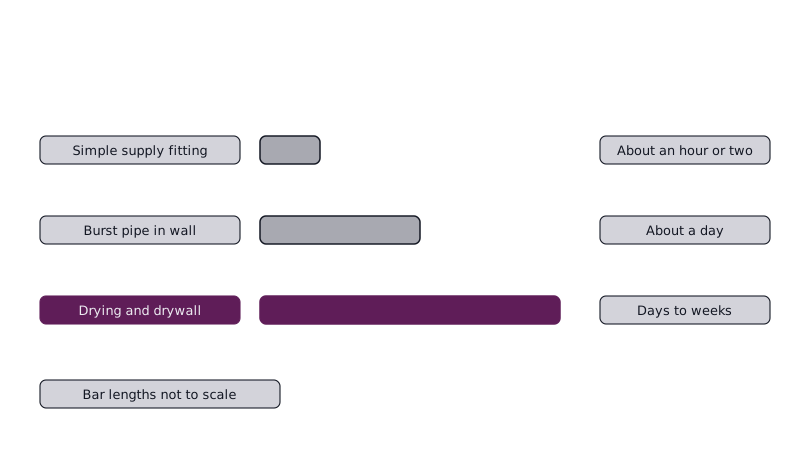
A simple repair, such as a loose supply fitting, might take an hour or two. A burst pipe in a wall or ceiling often runs a day once the section is located and opened, with drying and repairs stretching from days to weeks afterward. The pipe repair is the short part. Drying and drywall are the long part.
What affects the timeline:
- Ease of reaching the pipe. A pipe above a ceiling with no attic access means opening drywall.
- Pipe material. Copper, PEX and other pipes need different repair parts.
- Whether the whole house has to be shut off from the water supply.
- Drying time. Common advice is to get wet materials dry in a day or two, to head off mold.
- Permits, which not every small repair needs. For addresses within city limits, ask the City of Murrieta Building and Safety Division.
If a burst pipe has flooded a floor, call your insurer too. Insurance and burst pipes is explained separately.
Is a small ceiling water leak an emergency?
It is urgent, though not always an emergency. A slow drip from a bathroom above can wait for a visit that day or the next, provided you stop that fixture and contain the water. A steady flow, a bulging ceiling, or water near wiring is a true emergency. Small leaks grow.
Why hurry: wet drywall softens and sags, insulation holds water against framing, and mold may begin within a day or two. A small stain that grows after each shower or storm is telling you something. Trace its edge in pencil, add the date, and watch whether it spreads.
How do you handle mold after a ceiling leak?
Dry the area fast, and replace what stays wet. Commonly advised guidance is to dry wet materials within about a day or two. Fans and dehumidifiers help. Drywall and insulation that stay soaked usually need removing. A small patch of surface mold may be wiped off, but a larger area or musty smell calls for a professional.
Points to know:
- Wear gloves, eye protection and a mask when cleaning mold.
- Do not paint over a stain until the source is fixed and the area is dry, or it will come back.
- Hidden mold in the cavity above the ceiling is a reason to open the ceiling.
- If anyone in the home has asthma or is sensitive, ask a medical professional about exposure.
What changes in an apartment or a lower-level room?
In a rental, tell the property manager or landlord at once, in writing, and keep a copy. Among a landlord's habitability duties, California Civil Code 1941.1 includes working plumbing. If the water comes from the unit above, the landlord handles it, and your belongings may fall under renter's insurance.
For a ceiling below a bathroom or a lower level of the house, the same steps apply. The source is above, so look for the wet area directly overhead. If you have a basement or a lower level, check for water in wall cavities too, and look at the slab for dampness. Leaks under concrete are a separate job, covered by slab leak detection and repair.
To have a plumber look at a ceiling leak, send the quote page form. Requests go to local plumbing businesses, which pay us a fee when they take one; the business that visits sets the price. See how it works or return to the Murrieta Creek Plumbing home page.
Common questions
Can a ceiling leak fix itself?
Not if the source is a supply or drain line. A drip from a one-off event, like an overflowed tub, stops when the source stops, but the damage stays until dried and repaired. A leak that returns with each shower, AC cycle or rainstorm is an active problem, so find the cause.
Which questions do I put to the plumber checking my ceiling leak?
Ask how they plan to locate the source without opening more wall than needed, whether they test the pipe under pressure, whether the quote covers drywall patching, and who handles drying. Request photos of the damaged pipe, if one turns up. Settle the price before work begins.
Is a leaking light fixture dangerous?
Yes. Wiring that gets wet can cause shocks or fire. Do not touch the fixture or switch. Flip the breaker off only if that is safe to do while dry, and call an electrician. Leave bulbs and covers alone, since trapped water can drop out unexpectedly.
Who pays for ceiling repair?
That turns on what caused the leak and what your policy says. Insurance often treats sudden bursts differently from long-term seepage. Read your policy, call your insurer early, and keep photos and receipts. In a rental, the landlord is responsible for the building, and your belongings may be covered by renter's insurance.
References
- EPA WaterSense, Fix a Leak Week
- California Civil Code section 1941.1, landlord habitability duties
Last changed