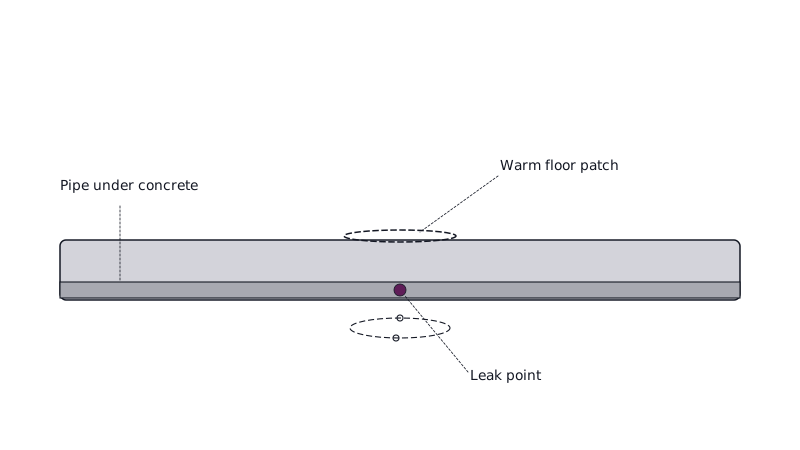
A slab leak is a leak in a water line under or inside your home's concrete foundation. You cannot see it, so it shows up as a warm floor patch, running water when everything is off, or a bill that climbs for no reason. A plumber finds it with listening and imaging tools, then picks spot repair or rerouting. For the wider range of leak help, begin with the page on leaks and bursts.
How can I tell a slab leak is happening?
Look at the symptoms as a group, not singly. Classic signs include a warm or hot patch of floor, the noise of flowing water when all taps are off, a meter that keeps moving although nothing is in use, damp carpet or flooring, a musty smell, cracked or lifted tiles, and dropping pressure. Any one of them alone could point elsewhere.
A useful self-check:
- Shut every tap and appliance, and do not forget ice makers and irrigation.
- Read the water meter, or watch its leak indicator. Use no water for twenty to thirty minutes, then read again.
- If the reading changed, close the house's main valve and watch whether the meter stops. A meter that carries on means the leak lies between the meter and your valve, outside the house.
- If it stops, walk through the house barefoot, feeling for warm patches, especially in the kitchen and near the water heater, since the hot line is a frequent culprit.
- Listen near the floor at night.
Treat a hot spot with care. Smelling gas is a separate emergency: get out of the house first, then use the SoCalGas line, 1-800-427-2200, once outside. For wider checks, see telling whether a pipe burst underground.
EPA data show an average household losing more than 9,300 gallons yearly through leaks. A slab leak can waste more than that quickly.
How do plumbers find a leak under concrete?
They isolate the line first, then locate the leak. Pressure testing shows which pipe loses pressure. Electronic listening gear catches the noise of water escaping through the slab. Thermal imaging spots warm spots from hot lines. Some businesses use tracer gas or line cameras. Marking the spot comes before any cutting.
How the methods differ:
- Pressure isolation. Hot and cold lines are capped and tested separately, narrowing down which line is leaking.
- Acoustic detection. A sensitive microphone is moved across the floor. The sound is loudest above the leak.
- Thermal camera. Finds a hot line leaking warmth into the concrete.
- Tracer gas. Harmless gas is introduced and detected at the surface, which suits quiet leaks.
- Moisture meters. Confirm wet material around the suspected spot.
Good detection reduces how much concrete or wall is opened. Ask which methods will be used and whether the location is marked before cutting. A detection fee may be separate from repair, so ask. See leak detection costs for what to expect.
What are the repair options for a slab leak?
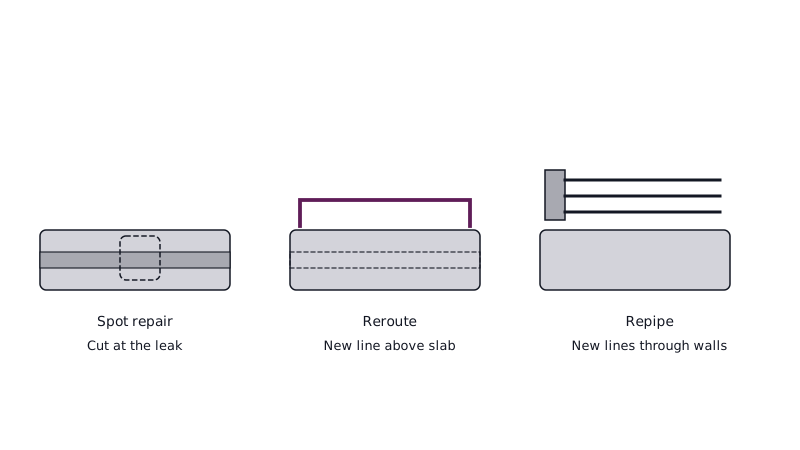
There are three main routes. In a spot repair the plumber opens the slab over the leak, patches the pipe and closes the concrete. Rerouting abandons the leaking line and runs new pipe overhead, in the attic or inside the walls. A repipe swaps out most of the system. The best choice depends on earlier leaks and on the pipe material.
Compare them:
- Spot repair. Often the fastest and least disruptive, if the damage is limited to one place. A good choice for a first leak in sound pipe.
- Reroute. New supply line, often PEX, runs overhead or in walls, bypassing the slab. It costs more upfront, but the problem line is out of the concrete.
- Repipe. A whole-house replacement. Sensible when leaks keep returning or the pipes are failing in many places. The choice is weighed in slab leak repair or repipe.
- Pipe lining or epoxy coating. Some businesses offer lining. Ask about suitability for your pipe, and what warranty exists.
The first leak does not always call for a repipe, but a second or third in the same line often does. For the factors that raise or lower the bill, see slab leak repair costs.
Why do slab leaks happen in homes here?
Causes vary: pipes rubbing against concrete or each other, corrosion, water chemistry, high pressure, poor installation and ground movement. Many homes in Southern California sit on slabs, and Murrieta is no exception, with plenty of homes built around 2000 or later. Which cause applies to your house is something a plumber can work out.
High pressure is one you can check. The ceiling set by the California Plumbing Code is 80 psi, so check with a gauge. Anything above that suggests the regulator may need work. There is more on water pressure and valves. Hard Inland Empire water may also contribute to long-term wear, though we have not seen it proven for a specific house, so ask the plumber for their own observations.
If the house has a hillside lot or slab cracks, tell the plumber. Movement can stress lines.
What happens to the house during repair?
Expect noise, dust and some floor damage. Water to the house is shut for some hours of the day. Crews may lift flooring along the route to the leak, then saw and jackhammer the slab. Repairs to flooring and the concrete patch are often separate trades. Ask what is included and what is not.
Practical points:
- Water to the house is off while the line is isolated. A temporary supply may be possible.
- Furniture, rugs and valuables need to move out of the work zone.
- Dust control varies. Ask what the plumber does.
- A permit may apply to rerouting or repiping. Within city limits the City of Murrieta Building and Safety Division issues them; county offices cover unincorporated areas.
- Insurance may cover some of the cost of accessing and repairing, depending on the policy. Call your insurer before the work starts and keep photos.
Moisture left under flooring can lead to mold. Make sure the area is dried before the new floor goes down.
What can I do before the plumber gets here?
If a slab leak looks likely and water is escaping, close the main valve, and keep it shut only as long as needed to limit damage. Get items off wet floors, run fans, and photograph everything. Never drill or cut into the slab yourself. Note the meter reading together with the time of the reading.
To book a visit, use the quote page. Requests are passed to local plumbing businesses, which pay us a fee, and whichever business comes out sets the price. See how it works or go back to the Murrieta Creek Plumbing home page.
Common questions
How long does fixing a slab leak take?
Spot repairs frequently finish inside a day. Rerouting needs one or two days, and repiping runs several, although homes differ a lot. Flooring and concrete finishing add more time. A schedule from the plumber comes only after the leak has been located, not before.
What questions go to the plumber before a slab leak job?
Ask how the leak will be pinpointed, whether the quote includes concrete patching and flooring, whether a permit is included, what the warranty covers, and whether a reroute or repipe is advised. Also ask how often that pipe has leaked before. On a large job, collect at least two opinions.
Can a slab leak damage the foundation?
A long-running leak can wash out soil under a slab and soften it, and standing moisture harms flooring and framing. Serious foundation harm takes time and large volumes, but it is a reason not to wait. The sensible order is to stop the leak, dry the area, then keep an eye out for new cracks.
Does insurance cover a slab leak?
Sometimes, and only in part. Many policies pay for sudden accidental damage and the expense of getting to the pipe, yet exclude the pipe itself and slow seepage over time. Wording varies, so read yours and call early. We cannot say what any particular policy covers.
Last changed