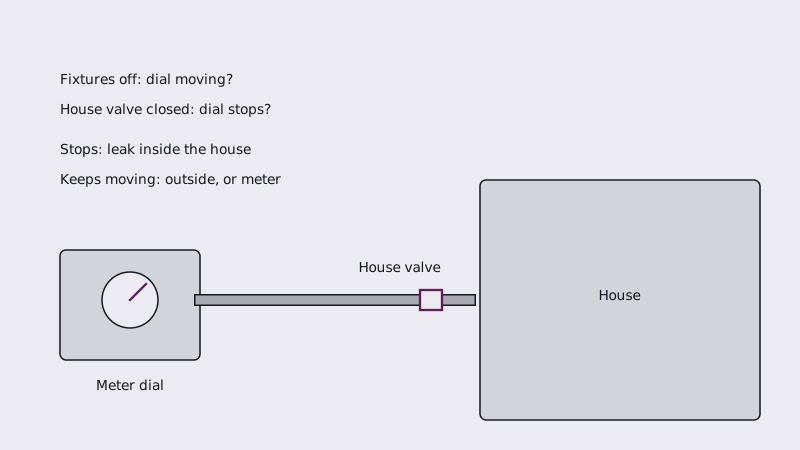
When the bill jumps but no wall is damp, water is escaping somewhere you cannot see or hear: a toilet, a sprinkler line, a buried pipe, a slab or a water heater relief valve. EPA data put the average household loss from leaks above 9,300 gallons of water per year, so begin with a test. The leaks page has more help.
How do I test for a hidden leak using my meter?
Turn off every fixture, ice maker, irrigation and appliance. Find the meter, usually in a ground box near the curb, and lift the lid. Look at the small dial or triangle on the meter face, which spins even at low flow. If it moves while everything is off, water is escaping. Write down the reading, wait fifteen minutes with nothing running, and look again.
Some meters carry a small indicator that turns or blinks for even tiny flows. Others have only a main dial, so compare readings. Take a photo of the dial with the time showing, as proof. If the dial moves, shut the valve at your house and recheck. A stopped dial puts the leak inside the property, whereas a dial still turning points to a leak between meter and house, or a faulty meter.
Meter boxes can have insects or standing water, so be careful and use a stick or gloves.
Which silent leaks are most common?
Toilets lead the list by a good margin. When a flapper no longer seals, water trickles into the bowl quietly all day. Next come irrigation valves that stick open, broken sprinkler heads, a leaking water heater relief valve line, a dripping hose bib, and a pool autofill. Check all of these before assuming a buried pipe.
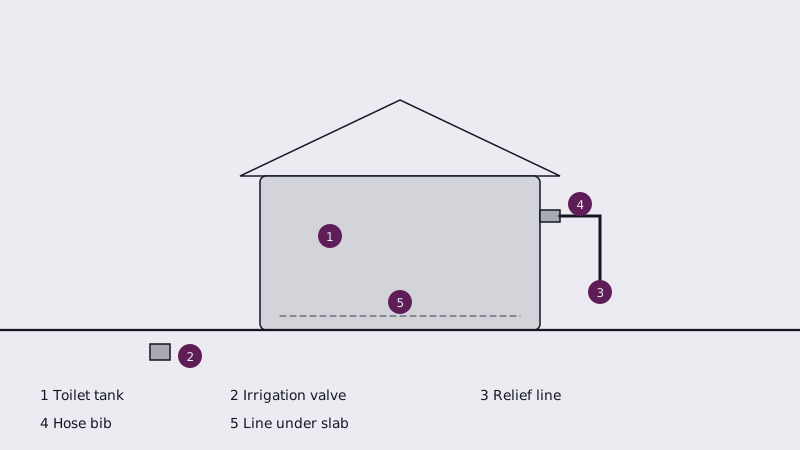
Try the dye test: add several drops of food coloring to each toilet tank, wait twenty minutes and do not flush. Tinted water in the bowl shows a leak. Then run each irrigation zone in turn and look for pooling or soggy lawn between cycles. Look at the pipe leading from the relief valve at the water heater, which often runs outdoors and drips unseen.
See toilet flush repair for the flapper fix, and the full list of what drives a high water bill for the other causes.
Might the leak be beneath the slab or buried outside?
Yes, and slab-on-grade houses see it often. Signs include a meter that keeps turning once the house is shut up, one patch of floor that feels warm, running-water noises at night, damp carpet or baseboards, cracked tile, or a patch of green or soggy ground outside. Copper in a slab can corrode from outside or from water chemistry.
Census-based estimates put the median Murrieta home near the year 2000, so pipes under slabs are now decades old in many areas. That is a statement about timing, not a claim about your pipe, since materials vary. A plumber can confirm with acoustic listening gear, a pressure test of each line, or thermal imaging, without opening the floor first.
For a suspected slab leak, our pages on locating and fixing slab leaks and on telling whether a pipe burst underground are the next stop. Hot-water slab leaks often show as a warm floor and an unexplained gas or power increase.
Can my water softener, irrigation controller or billing cause it?
Yes to all three. If a softener regenerates too often, or its valve sticks, hundreds of gallons may go down the drain. An irrigation controller that is reset by a power cut often reverts to a factory schedule. And water bills can reflect a rate tier change, a reading error or an estimated read. Check the dates and the units used.
Look at the bill for the meter readings and the usage over previous months. Seasonal swings are normal in summer. Many districts charge per unit, and a unit is 748 gallons, so a jump of a few units may be only a few thousand gallons. The district named on your bill, usually Eastern Municipal Water District in Murrieta but sometimes Western Municipal or Rancho California Water District, can check the meter and the read.
If you have a softener, see our guide on softeners and high water bills.
When should I call for leak detection, and will the district help?
Call when the meter test shows movement and the toilets, irrigation and relief valve are clear. Ask the plumber for the method they use and a written price. Leak detection usually costs far less than opening floors, and finding the spot narrows the repair. Our leak detection cost guide lists what affects the price.
Some water districts adjust bills after a documented repair, but programs and limits differ and we did not verify them for each district, so ask the one on your bill before you repair, and keep receipts and photos. Insurance may cover resulting damage in some cases; that is a policy question.
California generally requires a contractor license when labor and materials reach $1,000, or when a permit is needed, which usually covers repairs of buried lines. Permits for the City of Murrieta come from Building and Safety, 951-461-6062 (city page; confirm).
When you use Murrieta Creek Plumbing, we send your leak detection request on to a local plumbing business; those businesses pay us a fee for requests they accept. Send the quote request with your meter test result.
Common questions
How many gallons can a leaking toilet waste?
A toilet with a leaky flapper may lose hundreds of gallons daily, enough to double a monthly bill in the worst cases. Because it makes little noise, owners rarely notice. Dye tests catch it quickly, and the repair is usually a cheap flapper or fill valve.
Does a high bill always mean a leak?
No. Summer watering, guests, a new pool, a new baby with extra laundry, rate changes and estimated readings all raise bills. Compare with that month last year, and run the meter test. If the dial stays still with everything off, a leak is unlikely.
Can I find a slab leak without special equipment?
Sometimes. Clues include a meter turning although every fixture is off, a patch of floor that feels warm, or running-water noises. Confirming and locating it needs equipment. Do not drill or chip tile yourself, since you can hit pipes or wiring.
Should I turn the water off until the plumber arrives?
For a serious leak, or one you cannot find, close the main valve and then drain the line by opening a faucet. For a slow leak, you can leave water on and shut off at night. Put a note on the valve so others in the house know.
Indirectly. Mineral-heavy water can speed corrosion and pinholes in copper over time. Third-party estimates rate Murrieta tap water as moderately hard to hard (roughly 6 to 11 grains per gallon), which varies by address, so check your district's quality report. Pinholes are a topic for copper pipe repair.
Last changed