When a water bill jumps, you have normally used more water than usual. The biggest culprits are a hidden leak, sprinklers or irrigation running longer, and a billing period with extra days in it; a rate change or a meter reading error is the rarer cause. Start by comparing bills, then test the meter. The Murrieta Creek Plumbing home page covers who to call if a leak turns up.
What most often explains an expensive water bill?
The usual reasons are a leaking toilet, a leak in the yard or beneath the slab, irrigation running more often in warm months, extra people or guests, and a longer billing cycle than usual. Compare the gallons or units on the last six bills, not only the dollar amount.
Look at the usage line, since the total includes fixed fees and tiers that move independently. Water is often billed in hundred-cubic-foot units, and one unit is about 748 gallons, so a jump of ten units is a jump of roughly 7,480 gallons. Seeing the number in gallons makes it easier to judge whether a jump fits the weather or the household.
Work through it in order: a leak you can find, outdoor use, indoor habits, and the bill itself. Each step rules out one cause, and most households find the answer in the first two. A toilet flapper that sticks open is among the most common indoor sources, and it makes no noise.
Why are plumbers so highly paid?
Plumbing is a skilled trade, and the rate covers the training, tools, vehicle, insurance, travel and the unpaid time spent on quotes and parts runs, not only the hour at your house. Hourly figures also include risk, since mistakes mean water damage. That is why written quotes and an itemized breakdown matter more than the headline rate.
You can compare fairly by asking for the same details from each business: scope, parts, labor, trip charge and any permit. If a price seems high, ask what drives it. A plumber who explains the work plainly is easier to trust than one who quotes a lump sum. The price request form is where to start if you want a quote.
When your bill points to a leak, send a request and we pass it to a nearby plumbing company able to visit you. Those companies pay us a fee for taking requests, and the one that comes out gives its own written quote.
Why did this month's water bill jump when nothing changed?
Look first at the dates. A billing period of 35 days costs more than one of 28 even at the same daily use, and estimated readings can be corrected later with a catch-up charge. Then check for rate changes, new fees and tiered pricing that puts extra gallons in a higher band.
Your own bill tells you who the supplier is. In Murrieta, water comes from one of a few districts, most often Eastern Municipal Water District, and some addresses are served by Western Water or Rancho California Water District. Wildomar is usually served by Elsinore Valley Municipal Water District, and Fallbrook and Rainbow have their own districts. Check which one bills you, and read its rate page.
Call the district if the meter reading on the bill does not match the numbers on the meter. Meters can be misread, can fail, or can be swapped, and districts will usually review a reading on request. Ask whether they offer a leak adjustment, since some do; this varies by district, so ask rather than assume.
How do you check for a hidden leak with the meter?
Close every tap and appliance, open the meter box and watch the dial. Many meters include an indicator for small leaks: a triangle or wheel that turns whenever any water flows. If the dial still turns while all water is off, a leak exists somewhere between the meter and your fixtures. Wait two hours and read the dial again to confirm, as EPA advises.
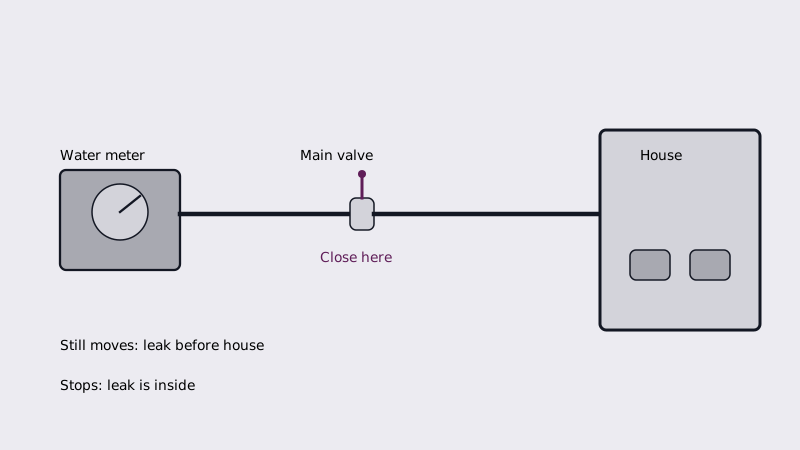
Then narrow it down. Close the main valve where it enters the house and check the meter once more. If it still moves, the leak is on the line between meter and house, which is the homeowner's pipe in most cases. If it stops, the problem is inside the house. Close fixtures one at a time to find the section.
EPA WaterSense reports that the typical home wastes upward of 9,300 gallons annually through leaks, and a larger break can cost far more within one cycle. If you want help finding a leak, the hidden ones are covered by an elevated bill where no leak is visible, and a dripping faucet has its own page: a leaky faucet and your bill.
How is water hammer related to a high bill?
Water hammer is the bang or thud you hear in the pipes once a tap closes, and it does not cause a high bill by itself. It does hint at high pressure or loose pipes, and pressure can raise use and strain fittings. A plumber can check the pressure and fit an arrestor or regulator if needed.
Test the pressure with a gauge screwed onto a hose bib; the plumbing code treats readings above 80 psi as too high. Pressure that high also makes small leaks worse and shortens how long toilets, faucets and the water heater last. See water hammer sound for fixes and adjusting the pressure regulator if the gauge reads high.
Could sprinklers or irrigation cause it?
Yes. During inland Murrieta summers, watering the yard frequently outweighs every other use of water at a home. A timer that runs too long, a stuck valve, a broken head or a split in drip tubing can add thousands of gallons without anyone seeing it. Check each zone while it runs and look for soggy spots.
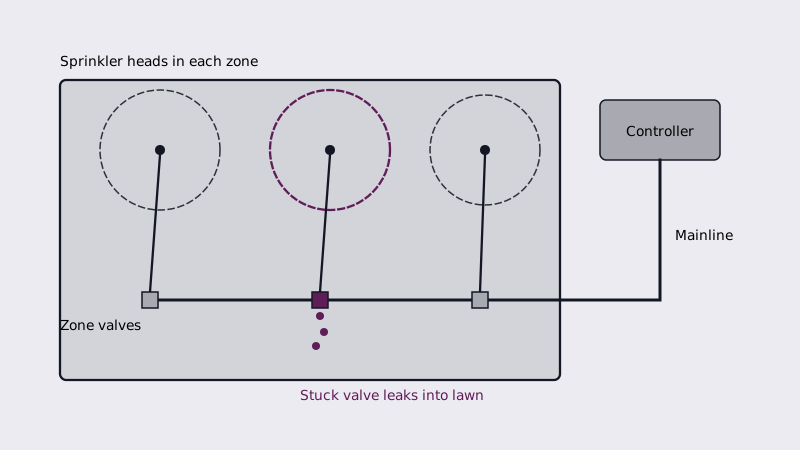
Run each zone by hand for a minute. Look for geysers, mist that drifts onto pavement, and water running along the curb. Check the controller schedule after a power cut, because many controllers reset to a default that waters every day. Turning the irrigation off and re-testing the meter tells you in minutes whether the yard is the source.
Seasonal change also matters. Lawns and trees need far less in winter, so a bill that stays high in January suggests something else is going on. If your bill is still high in winter with no change in habits, treat it as a leak until proven otherwise.
Does this apply outside Murrieta, such as in other utilities' areas?
The checks work for any water bill, because every utility meters flow the same way. What differs is who to call and how rates are set. This page is written for Murrieta and nearby areas such as Wildomar, French Valley, Winchester and Fallbrook, so use your own district's rate information.
Search results show people asking the same question about bills from many other utilities, and the answer pattern is the same: compare usage, test the meter, check irrigation and toilets, then read the rate page. Rate structures and fees differ, which is why two neighbors on different districts can see different bills for identical use.
Common questions
How many gallons can a running toilet waste?
A flapper that does not seat can waste a great deal, and the leak makes no sound. Put dye in the tank, wait ten minutes, and keep from flushing. When color reaches the bowl, the flapper is leaking. Replacing it is a cheap fix that you can often do yourself.
Could a water softener push the bill up?
A softener draws water to regenerate, so a stuck or mis-set unit can raise use a little. A fault that never stops draining can add more. Owners whose meter moves with everything else off should check the drain line. See the page on softeners and high bills.
Is my bill higher in winter than summer for a reason?
If winter use exceeds summer use, look for leaks or a stuck irrigation valve first, since lawns need little water in winter. A longer billing period, guests at home or an estimated reading can also explain it. Compare the actual usage line on bills across several months.
Which high bills call for a plumber?
Phone one when the meter moves although everything is off, when you find wet ground, stains or a hiss, or when usage stays high after irrigation is ruled out. A leak before the meter is the district's responsibility, so contact the district. A leak after it is a plumber's job.
Last changed