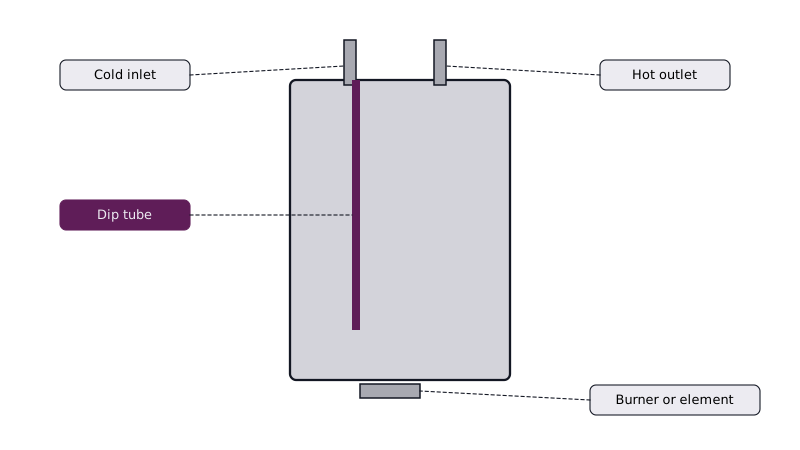
The dip tube is a long plastic tube in a tank water heater that carries incoming cold water to the base of the tank so the hot water above stays undisturbed. When it breaks or shortens, cold water mixes in near the top and showers turn lukewarm. Replacement is a modest water heater repair, described with other fixes in the water heater repair guide.
What does a dip tube do inside the heater?
Cold water arrives through the top fitting, and the tube guides it down low, where the burner or lower element heats it. Because hot water rises, the supply at the top stays hot while fresh water comes in low. Remove the tube and cold water pours in beside the outlet, cooling whatever you draw.
Think of a thin plastic straw sitting in the cold inlet fitting. Only tank types have one; tankless heaters do not. Gas and electric tank heaters both use the part, and the replacement is similar for either.
What shows that the dip tube is broken?
The classic signs are water that is warm but never hot and cools within minutes, a tank that appears to empty of hot water early, and small white or plastic flecks clogging faucet aerators, showerheads and washing machine screens. Weak hot water volume while the heater itself feels warm also points to it.
Cheaper causes come first: a thermostat set too low, a failed bottom element on an electric unit, sediment in the tank, or a mixing valve somewhere else in the house. The symptoms overlap with no hot water from a working heater, so a plumber usually checks several things before blaming the dip tube.
What makes a dip tube fail?
Plastic wears out from heat and age, and certain tubes manufactured in the mid 1990s became notorious for disintegrating early. A hard-water area makes this worse because scale builds in the tank and can break brittle pieces. Murrieta tap water is described in third-party estimates as moderately hard to hard, around 6 to 11 grains per gallon, but your own address may differ.
The result is plastic fragments traveling to fixtures. It is rarely dangerous, but it is annoying and it clogs aerators and valves, so replace the tube instead of just cleaning screens. Anode rod condition is the other tank-health check worth making at the same visit.
What is done during a dip tube replacement?
First the plumber shuts off cold water and power or gas and drains the tank through the drain valve. Then comes disconnecting the cold inlet pipe and unscrewing the nipple in the inlet fitting that retains the tube, pulling the old tube out and sliding in a new one trimmed to the right length, and reconnecting. Afterward the tank is refilled and purged of air, and the heater is relit or powered back on.
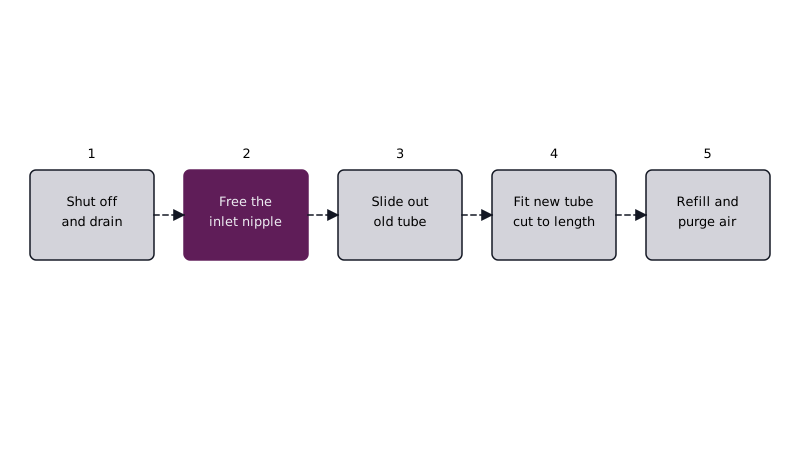
The job generally takes an hour or two. The tricky part is the inlet nipple, which may be corroded in place. Forcing old fittings can enlarge the work, which is why a plumber charges for the job and not just the part. Get the quote in writing before work starts.
Does an older heater justify a new tube?
Only when the tank itself is sound. A new dip tube costs little next to a new heater, but there is no point paying labor to repair a tank that leaks or rusts through soon afterward. Tank age, rust at the base and sediment noises all weigh against spending.
As a guide, if the heater is past the typical lifespan for its type, or showing leaks, replacement may be wiser. Check how often a water heater should be replaced and compare that with water heater replacement cost before deciding.
Does a dip tube swap require a permit?
Generally no, because the work repairs an existing heater without replacing it. Opening gas and water connections is still plumber work, though, and in California a contractor license is needed once a job passes a modest size. Replacing the whole heater does normally need a permit, issued by your local city or county building department.
The City of Murrieta Building and Safety Division covers Murrieta, the City of Wildomar covers Wildomar, and Riverside County covers unincorporated areas. Ask the plumber whether any work on your system triggers a permit. Should you smell gas at any time, leave the house, reach the SoCalGas line, 1-800-427-2200, from outside, and dial 911 if you feel in danger.
Common questions
Can I replace a dip tube myself?
Possibly, if you are comfortable draining a tank and the inlet nipple turns freely. It is mostly plumbing, with a risk of scalding if the tank is hot and of damaged fittings. Gas models add risk when relighting. Many homeowners prefer a plumber because a seized nipple can force a larger repair.
Are the plastic flecks harmful?
They are not a known health hazard, but they clog aerators, shower heads, dishwasher and washing machine inlet screens, and fill valves. Flush the lines at a tap after the repair to clear what is left. If you notice other debris, such as rusty sludge, the tank may be failing, which is a different problem.
How long does the repair last?
A new tube made for current water heaters usually outlasts the rest of the tank, provided the tank is sound. Scale and age remain the enemies, so flushing once in a while helps. Ask the plumber about the material and whether the anode rod needs a look.
Will the water be hot right after?
Give the tank time to heat after refilling, often an hour or more for gas and longer for electric. Run a hot tap first to purge air. If water is still lukewarm after that, the dip tube was probably not the only fault and another repair is needed.
Who do I contact to get it done?
Start on the quote page. We give your request to one nearby plumbing business, and it does the repair itself; those businesses pay us a fee for taking requests. No one at this site employs plumbers. How it works explains more, and the home page shows the other jobs.
Last changed