Calcium and magnesium get left behind whenever hard water evaporates or is heated, and that residue is scale. Most fixtures respond to a mild acid such as white vinegar or citric acid. To fix it for good, you cut the hardness at the source, which is the job of water softener installation is for. Both routes are below, starting with the quick cleaning.
What dissolves hard water scale on faucets and glass?
Plain white vinegar or a citric acid mix loosens the deposit so it wipes away. Wet a cloth or paper towel with vinegar, wrap it around the fixture for 30 to 60 minutes, then scrub gently and rinse. Glass and chrome usually come clean. Heavy buildup may need a second round.
Do not use vinegar or acids on natural stone such as marble or travertine, on some finishes like brass lacquer or oil-rubbed bronze, or on grout that is unsealed, because they can etch or dull the surface. Check the manufacturer's care notes. Never mix vinegar with bleach, which gives off a harmful gas. Wear gloves and ventilate.
Can a water softener end scale permanently?
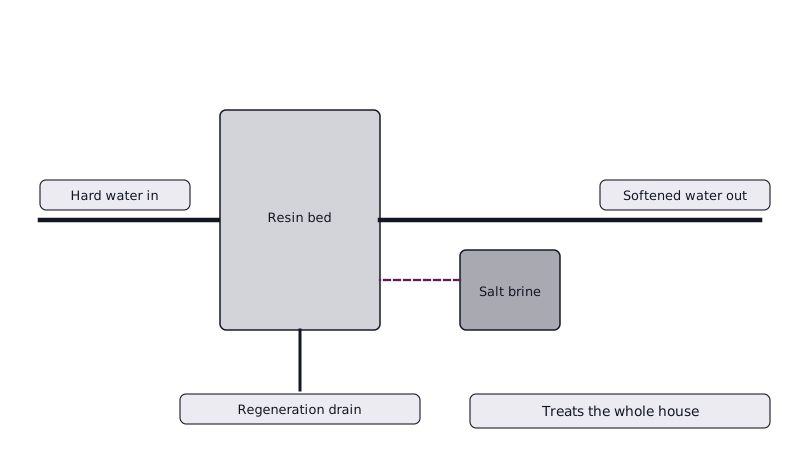
A salt-based softener swaps sodium or potassium in for the minerals that cause hardness, so scale stops forming in pipes, heaters and fixtures. It does not remove scale that is already there, though softened water slowly dissolves some. The system needs salt refills, regeneration drain water and setup by a plumber.
Plumbed in at the main, a softener treats the whole house. Salt-free scale inhibitors are sold as a lighter alternative, though results vary and no claims about them were checked here. See the pages on softener installation cost, whole-house softener cost and scale prevention. Some sewer agencies limit brine discharge, so ask the plumber what applies at your address.
Which scale removal mistakes should I avoid?
Do not use strong acids on plumbing you cannot see, do not scrape fixtures with metal tools, and do not run vinegar through a heater unless the manual says so. Never mix cleaners. Avoid pressure washing delicate parts. Turn off power before touching a heater element. If a part is clogged for good, replace it.
Muriatic acid and commercial descalers are corrosive and can damage seals, finishes and skin. Follow the product label, or leave heater and pipe work to a plumber. When in doubt, send a quote request. It reaches one nearby plumbing business, and the businesses accepting requests pay us a fee.
Is the scale inside my pipes and water heater?
Yes, it builds up inside where it is hot. A tank water heater collects scale and sediment on the bottom and on the elements, and in a tankless unit the heat exchanger gets coated. That reduces efficiency and shortens equipment life. Draining and flushing the tank, or descaling a tankless unit, are the cures.
Manufacturers publish flush schedules, often yearly, but hard water suggests flushing more often. Heating loops through scale also make popping or rumbling noises. A tankless heater is flushed with a circulating pump and a descaling solution, and in many homes a plumber should do that work; see tankless service and repair. Related: the anode rod wears faster in harder water.
How do I descale a showerhead or faucet aerator?
Unscrew the part if possible and leave it submerged in a bowl of vinegar for an hour or overnight. Then rinse it and scrub the spray holes with an old toothbrush. If it will not detach, tie a vinegar-filled bag around the head. Flow usually returns right away. Replace the part if the scale will not budge.
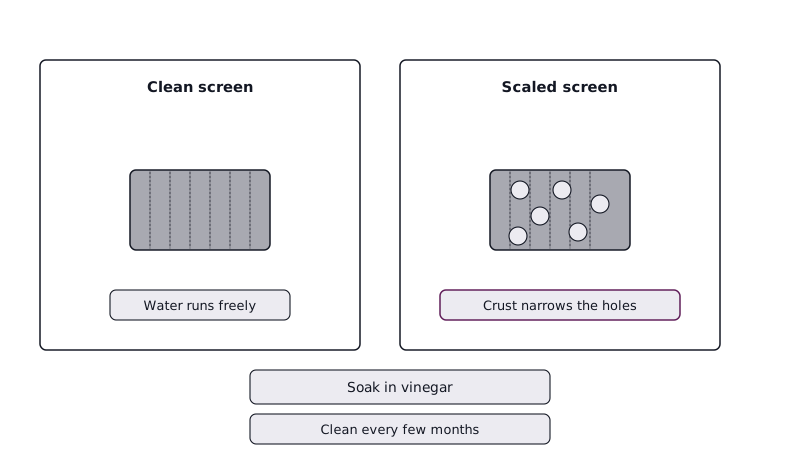
A small pin or toothpick helps clear individual spray holes. Aerators on kitchen and bathroom taps catch grit as well as scale, so clean them every few months if your water is hard. Clearing them also brings flow back, which is worth knowing if you are puzzling over reasons for low water pressure.
Just how hard is the tap water near Murrieta?
Third-party estimates, from waterhardness.org using 2023 to 2025 report years, put Murrieta tap water roughly between 6 and 11 grains per gallon, a range that falls between moderately hard and hard. The numbers conflict, and your address may differ. For a more accurate reading on your street, use the district's own water quality report or a hardware-store test strip.
Which district? Much of Murrieta gets service from Eastern Municipal Water District, yet Western Water and Rancho California Water District also serve parts, and Wildomar is usually served by Elsinore Valley Municipal Water District. Check which one bills you. Out in Rainbow, one district report listed about 15.6 grains per gallon in 2021, which is harder; it does not apply to Murrieta.
Common questions
Does hard water scale pose a health risk?
Generally not. Common guidance does not usually treat the calcium and magnesium found in hard water as a health risk. The trouble is the damage: reduced flow, spotted glass, dry-feeling laundry, and shortened life for heaters, dishwashers and other appliances that heat water.
Does vinegar damage a water heater?
Used on the outside of fixtures, it does no harm. Inside a heater, follow the manufacturer's instructions first. Some makers allow a vinegar flush of a tankless unit with a pump; tank heaters are normally just drained and flushed. If the manual is silent, ask a plumber before pouring anything in.
How often will scale come back?
Without treatment, quickly: a showerhead can crust within weeks, and a heater builds up over months and years. Softened water slows it a lot, and a monthly wipe with vinegar on visible fixtures keeps the rest in check without much effort.
Do salt-free descalers work?
Results are mixed, and no product or its claims were checked here. Ask the seller for independent test evidence and a clear return policy before you buy, and be wary of promises that scale will simply vanish without any maintenance.
This guide is one of many on Murrieta Creek Plumbing plumber.
Last changed