Start with hot tap water and dish soap, then a cup plunger while the other basin is plugged, then dismantling and cleaning the P-trap under the sink, and last a hand snake. That sequence solves the great majority of kitchen clogs without chemicals. If a drain clears and clogs again within days, the blockage is past the trap, and the pages on drain cleaning for clogs cover what a plumber does.
Kitchen drains clog differently from bathroom ones. Grease cools and hardens inside the pipe, food scraps snag on it, and the blockage keeps growing. A garbage disposal makes that worse, because it turns food into fine particles that settle. The sequence below fits a standard sink in tract homes in Murrieta and Wildomar as well as older houses.
What is the quickest thing to try first?
Pour very hot tap water from a kettle (not boiling) into the drain together with a generous squirt of dish soap, wait a few minutes, then run hot water. This loosens grease that has not hardened into a plug. It works only on a sluggish drain, not on a standing-water clog.
If the sink is full, bail out the water to a bucket first so the soap reaches the clog. Run the disposal briefly if you have one, to clear loose scraps.
Boiling water can soften plastic joints and crack old porcelain, so hot from the tap is the safer choice. A sink that drains slowly all the time, even after a clear, needs more than a flush; see the reasons a sink drains slowly.
How should I plunge a kitchen sink?
Reach for a cup plunger, never a toilet flange plunger. Pour in enough water to cover the cup, push a wet rag into the second basin drain and the dishwasher line, set the cup over the drain, and pump firmly ten to fifteen times. On the final stroke, break the seal and watch whether the water drops.
On a double sink, the second drain must be plugged or the pressure escapes there. If a disposal sits in one basin, plunge that one, and keep the other plugged.
Never plunge after pouring in a chemical drain cleaner. Splashing caustic liquid into your face or eyes is a real injury risk, and a plumber who arrives later needs to know what is in the pipe.
What is the way to clean the P-trap?
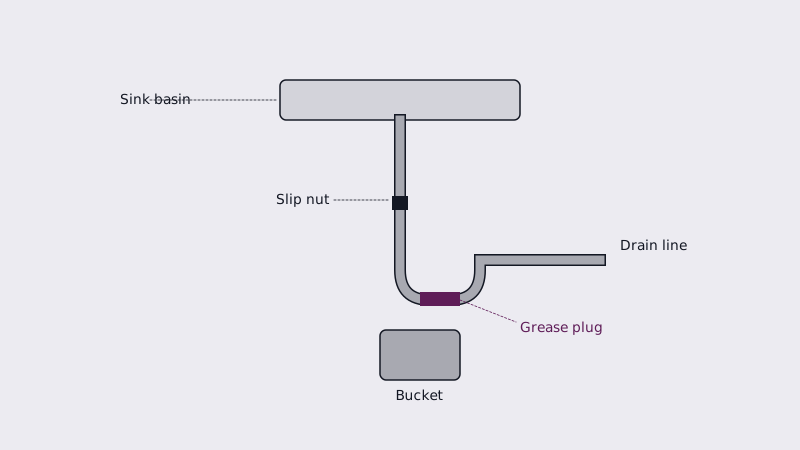
Set a bucket beneath the trap, then loosen the slip nuts by hand or with pliers. Drop the U-shaped pipe, tip out its contents, brush it clean, and check the short stubs on either side for gunk. Refit it with the washers flat, run the tap, and watch both nuts for drips.
Most kitchen clogs sit right here because grease pools in the low curve. It is messy and quick, and it does not need special tools.
Take care with plastic nuts: they strip if you force them, and replacements cost little. If you see a plug of grease the size of a fist, you have found it. If the trap is clean and the sink still stands, move to the snake.
If you have a garbage disposal, its outlet is part of the same line; see freeing a clogged garbage disposal drain before you take the trap apart.
Which situation calls for a drain snake?
Use the snake once the trap is clean but water still backs up, since that puts the blockage in the wall line beyond the trap. Push a hand snake through the open trap stub, turn the crank until it meets resistance, then break through or hook the blockage, pull the snake out, and run hot water. Most branch lines can be reached by a hand snake of 15 to 25 feet.
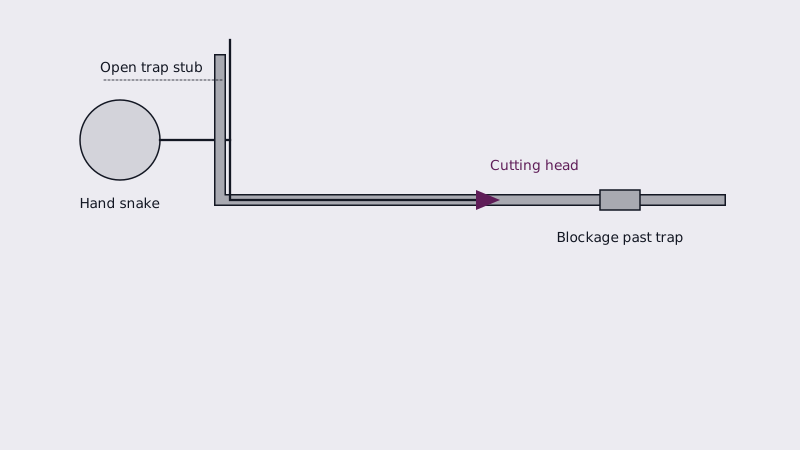
Do not force it hard, since a stuck snake in a plastic pipe is a worse problem. If the snake keeps hitting something it cannot clear, or comes out with roots, the clog is in the main or a buried line, which is plumber territory. For the general method, see unclogging a drain in general.
A motorized cable and a hydro jetter reach farther and scrub the pipe walls. Those are the tools a plumber brings.
Is baking soda with vinegar effective?
A little. The foaming loosens light grease and freshens the drain, but it rarely moves a solid plug. Pour in half a cup of baking soda followed by half a cup of vinegar, cover the drain for ten minutes, and rinse through with hot water. Use it for upkeep, not for a stopped sink.
Do not mix store-bought drain cleaners with it or with each other. Bottled drain openers can contain strong chemicals, and mixing them produces harmful gases.
Murrieta water is usually moderately hard to hard, and scale gradually narrows pipes, so sinks often slow down every year or two for that reason. Treating the cause, with a trap cleaning now and then, beats repeated chemicals.
When does a kitchen sink clog call for a plumber?
Make the call when the trap is clean and the snake fails, when several fixtures back up, when water rises in a nearby floor drain or tub, when the line gurgles, or when the clog is back within days. Each of these points to trouble in a branch or the main line, which is machine or jetting work.
Also call when the disposal hums without spinning, if a smell of sewage persists, or if a leak shows at the trap after you reassemble it. In unincorporated areas such as De Luz and Winchester, check whether your house is on a septic system, because a backing up kitchen sink there can be a septic problem and not a pipe clog.
The guide on unclogging a sink, and what a plumber charges lists what moves a quote. We print no dollar figure, since none is sourced for the area.
Whatever you send through the form reaches a local plumbing business. It pays this site a fee for the introduction, then gives you the price and does the work. Other jobs are on the home page.
Common questions
Why does my kitchen sink clog again and again?
Grease and food build a layer on the pipe wall that narrows it, and each plunge only clears the middle. A trap clean helps, and a plumber can scour the line with a jetter. Changing habits matters too: wipe pans before washing and bin the scraps instead of rinsing them away.
Can I pour grease down the drain with hot water?
No. Hot water carries it a few feet and it cools, sets and sticks. Pour grease into a can, let it set, and put it in the trash. Use a paper towel on greasy pans ahead of washing them. That does more for a kitchen drain than any treatment.
Are chemical drain cleaners a safe choice?
They carry risks: burns on skin and eyes, damage to old pipes and a hazard to the plumber who arrives later. If you have used one, tell the plumber. A plunger, trap clean and hand snake are safer and usually enough.
Does the dishwasher affect a clogged sink?
Yes, because it drains through the same line or the disposal. A clog can push water back into the dishwasher, and a blocked dishwasher hose can look like a sink clog. Check the dishwasher hose and the air gap if you see back-flow.
How do I stop the sink clogging?
Fit a basket strainer in each drain, never let grease or coffee grounds go down, and flush the line with hot tap water and a squirt of dish soap every week or two. A trap clean once a year, before anything backs up, also keeps the slow build of grease from turning into a plug.
References
Last changed