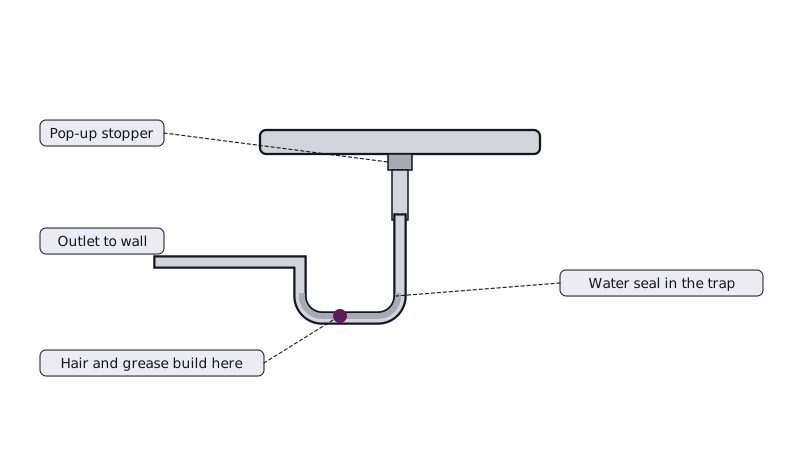
Three things slow a sink: gunk lodged at the stopper, a coat of grease or soap inside the trap, or a partly blocked branch line behind the wall. Time how long a full basin takes to empty, see whether anything else in the house is slow too, then work from the top down. The hub page on drain cleaning and clogs shows the bigger picture.
Why is my sink draining slowly when nothing looks clogged?
A partial blockage can pass water at a trickle without ever stopping it. Soap film, hair, grease and toothpaste residue shrink the pipe bit by bit. Slow flow with no visible plug is normally the early stage of a clog, and the narrowing most often sits at the stopper or inside the trap.
That explains the "not clogged" feeling: the water does go. It just goes at a fraction of the speed.
A second cause is less obvious. Water that gurgles, or drains faster on the first few seconds and then slows, may hint at a venting problem. The vent lets air in behind the water. Without it, water chases a vacuum and slows.
Third, a drain line with a dip in it holds a little water, and waste settles there. That kind of low spot builds up deposits on every use and is invisible from above.
What are the causes by fixture?
The location of the fixture points to the likely culprit. Bathroom sinks collect hair, toothpaste and soap in the stopper assembly, while kitchen sinks trap fat, coffee grounds and food particles. Showers and tubs clog with hair and soap near the strainer. Start with the matching row below.
| Fixture | Usual cause | First thing to try |
|---|---|---|
| Bathroom sink | Hair and soap on the pop-up stopper rod | Lift the stopper, clean it |
| Kitchen sink | Cooled fat and food in the trap | Plunge, then clean the trap |
| Double kitchen sink | One side is clear; blockage is past the tee | Plug the other drain, plunge |
| Shower | Hair under the strainer | Barbed strip |
| Several fixtures at once | Branch or main line | Call a plumber |
A double kitchen sink is worth a separate note. Both basins feed one trap, so a blockage past the junction slows both. A blockage on only one side is before the tee, and you can plunge it once a damp cloth is stuffed into the second drain.
What is the fix for a slow sink?
Lift out the stopper, strip off the matted hair, rinse it, and set it back. Still slow? Position a bucket under the trap, unscrew the two slip nuts, and clean the trap by hand. Reassemble it, run the tap, and watch for leaks. This cures many slow bathroom sinks.
On a kitchen sink, start with a cup plunger. Block the overflow, pour in water until the cup is submerged, and pump firmly. Use a flat sink plunger, not the flanged toilet kind, because the flange will not seal on a flat surface.
Hot water helps against grease. Boil a kettle, let it cool a little, and pour it in over two or three rounds. Never pour water fresh off the boil into a porcelain sink or plastic trap, since it can soften or crack them.
Avoid powdered and liquid cleaners where you can. They can corrode old metal and rubber parts, and they leave a hazard in the trap for the next person. The page on how to unclog a drain shows the sequence of tools in more detail, while separate steps for the bathroom sink and the kitchen sink sit on their own pages.
Why does a shower fill with water when no clog is obvious?
A shower that fills while the washer runs or a sink empties is sharing a line. The blockage lies past the point where those pipes join, so the shower itself is fine. A vent fault could also be the cause, since drainage slows when air cannot enter. Either one calls for a plumber with a cable or a camera.
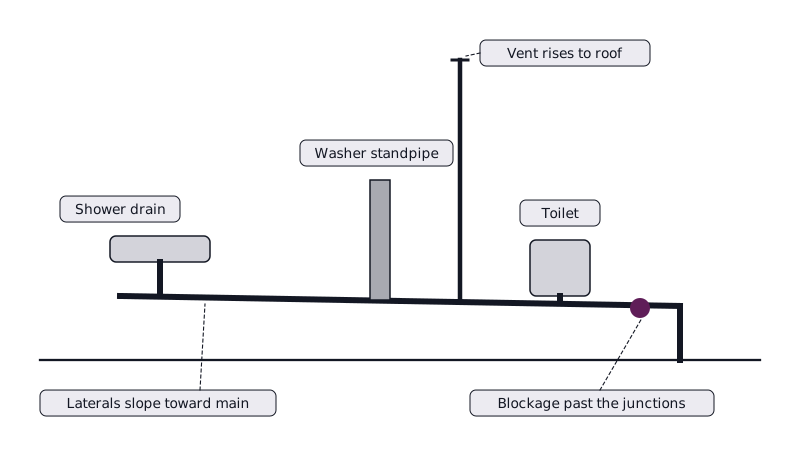
Try a simple test: with the shower empty, run the washing machine's drain cycle or flush a toilet. Water rising into the shower or tub means the main line or a major branch is partly blocked. Stop using water for a while, since a full backup can overflow indoors.
How can you tell the trouble goes beyond a single sink?
Several drains that gurgle, a toilet that bubbles while the sink empties, and water pushing up through a tub or floor drain all indicate the shared line. A sewer smell, or a sink that slows again within days of clearing, says the same. A hand tool will not fix these.
Home age matters a little. About half of Murrieta's housing went up after 2000, so many drain lines are relatively new. Older lines in older neighborhoods may have rough joints or aged materials that catch debris. Rural lots on septic can show slow drains when the tank is nearly full, so do not run extra water if several fixtures are slow.
Hard water scale can add a thin crust to pipe walls over time. Outside estimates rate Murrieta tap water somewhere between moderately hard and hard, and your district's water quality report gives a figure for your area.
When you are ready, send a quote request naming the sink and what you tried. We forward it to local plumbing businesses that pay this site a fee for introductions, and the company that replies prices and does the work. For a rough cost, see unclogging a sink and what plumbers charge. Everything else we handle is on the home page.
Common questions
Is a slow sink an emergency?
Rarely. A single slow sink can wait a day or two while you deal with the stopper and trap. Move quickly when several fixtures run slowly, a toilet or tub gurgles, a floor drain pushes water up, or you smell sewage. Those signs mean the shared line may block fully.
Does a plunger help on a slow sink, or only on a full clog?
It helps on both, as long as the plunger seals. Cover the overflow, add water over the cup, and pump hard. A slow sink often clears within a few rounds. When the water stays put after a second attempt, go to the trap or an auger rather than pushing harder.
What can I pour down the drain to keep it clear?
Nothing cures a build-up, but a monthly hot water flush after the dishes are done keeps grease moving. Avoid pouring fat or coffee grounds down the kitchen sink, and fit a mesh catcher in the bathroom. These habits do more than any product.
Could my sink stopper be the problem?
Yes. A pop-up stopper catches hair on the rod below, and a sink strainer plate can clog with food. Lift it out, clean it, and look underneath. If the stopper opens only part way, adjusting the lift rod behind the faucet often restores the full opening.
References
- General home plumbing practice; no price figures on this page
Last changed