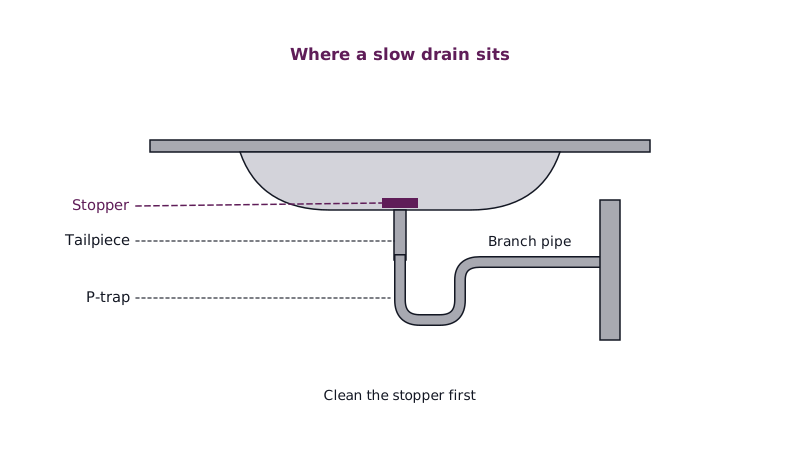
Fill the basin, pull the stopper and watch. Water that starts quickly and slows at the end points at the stopper or the tailpiece. Water that hangs about and trickles away from the first second suggests the trap or the branch line. Match that to the fixes below. Sinks that stop completely are covered at drain cleaning and clogs.
What does the way it drains tell me?
Three patterns matter. A sink that drains slowly but steadily is usually a partial plug of hair and soap. A sink that gurgles as it drains suggests a venting problem or a clog further along. A sink that drains well until a second fixture runs points to a shared line that is narrowing. Use the pattern to decide which tool to try first.
Try this test: run the tap into a half-full basin, then open the drain and time the emptying. Repeat after each fix so you can see the gain. If the shower or tub next to it drains slowly too, you are looking at a shared branch, not the sink, and cleaning the stopper alone will not hold.
How do I clear the stopper and the top of the drain?
Take out the stopper; on many sinks it lifts straight out, and on others it frees up when you unscrew the pivot rod nut underneath. Wipe off the slime, peel away the hair wound around it, and hook more hair out of the drain throat with a barbed plastic strip or a bent clip. Rinse with hot water from the tap.
Most slow drains clear this way, in about ten minutes. A flashlight helps. Do not poke a wire deep into the drain, which can scratch or push the clog further. If the stopper is a push-pop type with a lift rod, note where the rod hooks, then refit it the same way and test that it still seals, since a sloppy reassembly makes the basin hold water poorly.
Slow drains in a home that runs on a septic system, as some rural properties do, deserve extra care. Skip harsh chemicals there and clean mechanically.
Is a chemical or enzyme drain cleaner a good idea?
Skip caustic openers. They can damage old metal traps, splash on skin, and leave a pool of harsh liquid that makes the next repair dangerous. An enzyme or bacteria-based cleaner is gentler and suits mild, greasy buildup, but it works slowly and does little against a hair plug. Mechanical cleaning beats both.
If you try an enzyme product, follow the label, and give it time overnight. Do not combine products. A plumber will not thank you for a drain filled with mixed chemicals. Hot tap water flushed through the drain after each use helps keep soap from solidifying.
Is hard water part of the slow drain?
It can be. Hard water leaves mineral film that catches soap and hair, narrowing the pipe a little more each month. Third-party estimates put Murrieta tap water in the moderately hard to hard range, and your district's water report has the real figure for your address, so check which district bills you before assuming anything.
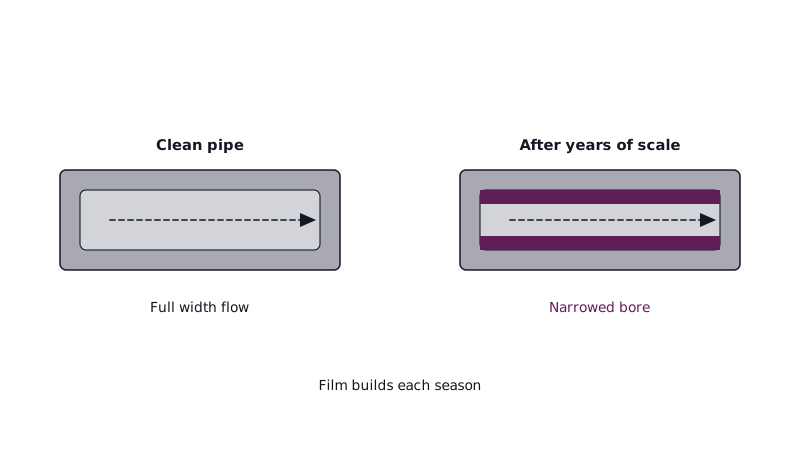
Because of that film, a sink that was cleaned thoroughly will often slow again in a season or two. That is normal, not a sign you did it wrong. A water softener changes the picture over time but adds its own considerations; removing hard water scale and water softener installation cover both sides.
What should I do about the trap on a slow drain?
Set a bucket beneath it, undo the slip nuts, lower the trap, and clean out the sludge. Look at the washers, rinse the bend, and refit it hand-tight. Run water and check for drips. The trap catches grease and hair together and is the second most common slow-drain site after the stopper.
Check the pipe slope too. A horizontal run that dips and holds water leaves a place for scum to collect, and a trap installed backwards or too low slows the flow. If the trap is clean yet the sink still drains badly, the blockage sits in the wall pipe, and a small snake or a plumber's machine reaches it. The step-by-step for a fully blocked basin is at unclogging a bathroom sink, and the wider causes are at why a sink drains slowly.
When do I need a plumber for a slow drain?
Make the call when the drain stays slow after you clean the stopper and trap, several fixtures run slow together, the sink gurgles or smells of sewage, water leaks at the trap, or the slowness returns within weeks. A camera or machine can locate what a hand tool cannot reach.
A written quote should name the method and say what happens if it fails. A contractor license is needed in California for work above a small dollar threshold and for permit work. A drain clear is typically small, while a new cleanout or a replaced section of drain line is a bigger job, so ask whether a permit applies. For price context, see what plumbers charge to unclog a sink.
Request a price and describe the pattern you saw. From the plumber home page you can see our other services.
Common questions
How often should I clean a bathroom sink drain to keep it flowing?
Every month or two for a busy family sink, less often for a guest bathroom. A strainer in the drain catches most hair. Pulling the stopper and wiping it takes a minute and saves the trap from filling up, which is where the real work starts.
Is a gurgling sink a sign of a vent problem?
It can be. A drain needs air behind the water, and a blocked vent stack makes the water gulp and the trap siphon dry. Gurgling together with a slow drain in several fixtures suggests trouble in the vent system or the main line, and that calls for a plumber.
Why does my sink drain slowly only after I brush my teeth?
Toothpaste, soap and hair are sticky, and a small plug builds at the stopper. A few weeks of brushing can pack the first few inches. Clean the stopper and the tailpiece, and wipe the basin before rinsing so less residue goes down.
Can a slow sink damage anything?
Standing water softens nothing by itself, but a sink that overflows can wet a vanity and the floor, and a long-standing clog can rot a trap or cause a leak at the slip nuts. Fix it before it floods, and call if the drain keeps slowing.
Last changed