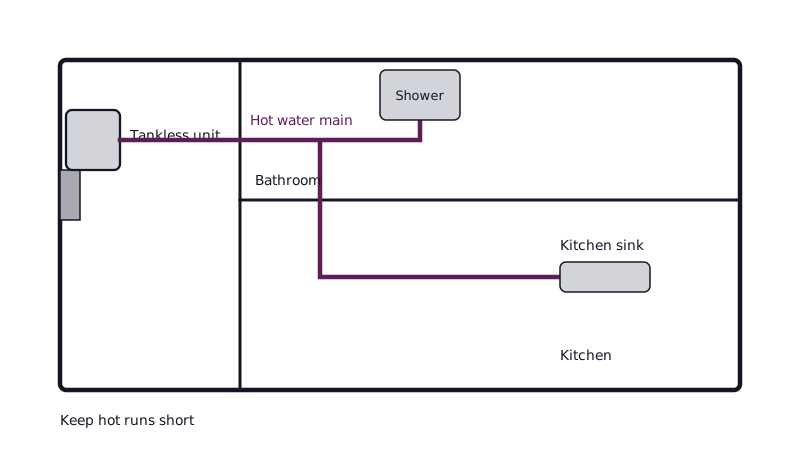
A Rinnai tankless heater is a wall-mounted gas appliance that warms water while it flows through, so installation comes down to four things: choosing a model large enough for the fixtures you run together, supplying enough gas, venting the exhaust safely, and plumbing it with valves you can flush. For other heater topics, see the main guide on repairing or replacing a water heater.
What steps go into putting in a Rinnai tankless heater?
The old tank comes out, and the plumber mounts the unit on a wall indoors or outdoors, hooks up gas plus cold and hot water, runs vent pipe, adds a condensate drain for condensing models, fits isolation valves and a relief valve, sets the controls, and tests. A permit and an inspection normally come with it.
The order matters. Gas and water get shut off first. The tank is drained and removed. The wall gets a bracket sized to the unit's weight. Vent pipe exits via the roof or a side wall, built from the material the maker specifies and laid out as its instructions say. Rinnai publishes installation manuals, and for your model the plumber works from that manual instead of habit.
Ask whether the installer will set the temperature and walk you through the controller. A common setting is 120 degrees Fahrenheit, which limits scalding risk. Also request the model and serial numbers for warranty registration, which usually falls to the owner.
How is the right Rinnai size chosen?
Sizing comes from two numbers: the gallons per minute you need when several fixtures run together, and the temperature rise from the cold inlet to the hot setting. A family that runs two showers and a dishwasher needs a larger unit than a couple who showers one at a time. The plumber adds up the fixtures and picks the model with margin.
Look at the flow rates stamped on your faucets and showerheads, and think about the busiest morning. Undersized units make hot water that runs out of heat when two outlets open. Oversized units cost more and may cycle at low flow. The unit's rating tables show flow at different rises, and Murrieta's cold-water temperature varies with the season, so a plumber works from the colder winter case.
If one far-off bathroom takes a long time to warm, a recirculation system, or a compact unit installed right at that bathroom, may help. Ask about both before the work starts, since adding a return line later is harder.
Does the gas line need to be bigger?
Often yes. Compared with a storage heater, a tankless burner draws a lot more gas all at once, so pipe sized for the old tank can leave the new unit starved at full fire. The plumber works out the load and how far the pipe has to travel, then upsizes the pipe or adds a branch if required. This is gas work and needs a permit.
Gas piping falls under California's contractor license rules, so a handyman or an owner should not take this on. When gas is in the air, exit the house, then ring SoCalGas at 1-800-427-2200 from outside, and dial 911 if anyone is in danger. SoCalGas is the expected utility across Murrieta and Wildomar, though rural lots may use propane. Fallbrook, Rainbow and De Luz sit in San Diego County, where the gas utility may differ, so check your bill. Related pages: installing a gas tankless heater and what gas line work costs.
Where does the exhaust go, and what is the condensate drain?
Gas tankless units vent combustion gases through a sealed pipe to the outside, and condensing models also produce acidic condensate that must go to a drain, often through a neutralizer. A plumber follows the manufacturer's vent rules for material, length and clearances. Wrong venting is a real hazard, including carbon monoxide.
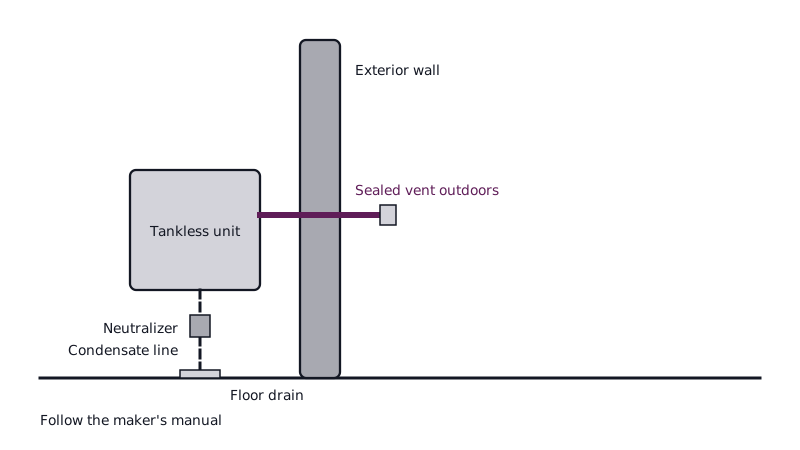
Outdoor-rated models skip indoor venting but need clearances and protection from weather. The condensate line must slope to a floor drain, laundry standpipe or a tied-in drain, and it needs a trap or neutralizer according to the manual. Do not let anyone install a unit in a closet with no combustion air. Install a carbon monoxide alarm near the sleeping areas anyway.
What about hard water and scale?
Hard water leaves scale inside the heat exchanger, which cuts flow and efficiency. Murrieta tap water is commonly rated moderately hard to hard, roughly 6 to 11 grains per gallon in third-party estimates (waterhardness.org, 2023-2025 report years); your address may differ, so check your district's water report. Isolation valves let a plumber flush the unit with a descaling solution once a year.
If your water is hard, ask about a softener or a scale-prevention filter ahead of the unit. See water softener installation and hard water scale prevention. Keep the flush valves accessible, and put the service date on a label by the unit.
Does a Rinnai installation need a permit?
Yes. A permit is required in California to replace a water heater, and a gas tankless install adds checks on gas piping and venting. For addresses inside the City of Murrieta, contact the Building and Safety Division, listed at 951-461-6062. Addresses in Wildomar, Riverside County and San Diego County use different offices.
Request the permit number and the inspector's sign-off from the plumber. The state board runs a license lookup you can use on the plumber: CSLB, hiring a contractor.
What happens to hot water during an outage?
Most gas tankless units need electricity for the fan and the controls, so when the power is cut you get no hot water even though gas is flowing. A battery backup can run a small unit for a short time. Since outages are a worry for some households, ask the plumber which backup choices exist for your model.
Some owners keep a small plug-in power station for emergencies. Check the model's power draw and whether the maker approves it. If outages are common where you live, raise it before the model is chosen.
How do you compare a Rinnai with other brands?
Compare the same things across brands: capacity, efficiency rating, venting method, warranty, parts availability and local service. A brand that a plumber knows well and can service is worth more than a spec-sheet edge. Ask which models the plumber installs most, and why.
For repairs, see Rinnai tankless water heater repair, Navien installation, and the broader tank versus tankless decision. We pass your request to a nearby plumbing company that visits and quotes the install; companies taking requests pay us a fee. Start on the price request page, or go back to the Murrieta Creek Plumbing home page to see the other jobs we handle.
Common questions
How long does a Rinnai installation take?
Replacing a tank with a tankless unit often fills most of a working day, longer if the gas line, vent or condensate drain must be built from scratch. The permit inspection adds a separate visit. Ask for a start date and an estimate of the hours without water.
Can I install a Rinnai myself?
Not legally for the gas and permit parts. California demands a contractor license for gas piping and for every job that requires a permit, and a venting mistake can cause carbon monoxide. Where you can pitch in is clearing the space, choosing a model with the plumber and registering the warranty.
Do I need a recirculation pump?
Not necessarily. A tankless unit gives hot water without a tank, but the water already sitting in the pipe run from the heater to the tap still has to flow out first. A recirculation pump or a built-in loop shortens the wait, at the cost of some energy. Ask for it in the quote.
What maintenance does a tankless heater need?
An annual flush to remove scale, a look at the vent and inlet screen, and a check of the condensate drain. Hard water makes the flush more important. Keep the manual and the service dates. The flush takes a plumber only a short visit.
Will a tankless heater work in an older house?
Often, but older homes can have gas lines, venting paths and wall space that need rework. Older streets and rural lots may differ from newer tract homes. A site visit reveals what the install needs, and every item should appear on the quote line by line.
Last changed