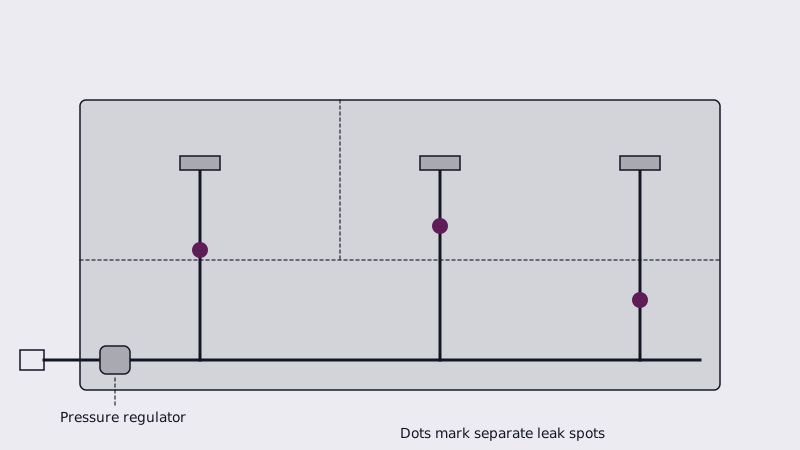
A repipe is called for once the supply pipes fail quicker than patches can keep up: repeated leaks, rusty or discolored water, weak pressure that cleaning does not cure, or a pipe material with a poor record. Replacing the lines costs more up front than a repair but can end a cycle of damage. This sits under our repiping and pipe replacement help.
What problems make repiping worth it?
Repiping makes sense when leaks keep returning in different spots, when water runs brown or metallic, when pressure is low in several fixtures because the pipe is clogged inside, or when the pipe material has a known record of failing. One leak is a repair, and a third within a year suggests the pipe is at fault.
Add the cost of the damage to the cost of the fix. Each leak can mean opening a wall, drying out framing, repainting and maybe replacing flooring, and the next leak will do the same. When repair bills and damage start to approach what new pipe would cost, the project begins to save money. A plumber can count the failures with you and give a view.
Look at where the symptoms show up. Trouble at one fixture often points to a local problem such as a clogged aerator or valve. Trouble everywhere, especially with discolored water, points to the pipe itself. Keep a log of dates and locations, which helps any quote.
What does a repipe project involve and cost?
In a repipe the supply lines to every fixture are replaced, and the supply stays shut while the crew works. Plumbers open small sections of drywall, run new pipe, connect fixtures, test the system and then patch. Cost is driven by house size, fixture count and access. We do not state a dollar range because none has been confirmed.
Expect disruption: the supply shut for part of every day, some drywall patches that need paint, and a plumber moving through the house. Ask if patching and painting come with the quote, since some quotes stop at the plumbing. See the pages on repiping cost and PEX repiping cost for what shapes a quote.
A repipe normally calls for a permit as well as an inspection. For addresses in the city of Murrieta, permits are issued by the Building and Safety Division, 951-461-6062. French Valley, Winchester and other unincorporated areas come under Riverside County. In California, jobs of $1,000 or more in labor and materials, or any job needing a permit, call for a contractor license, so check the CSLB website before signing.
Is PEX or copper the better choice for a repipe?
Both work, and the better one depends on the house and budget. PEX is flexible, needs fewer openings in the walls and generally installs for less. Copper is rigid, long-lived and common in older homes. Water chemistry can wear copper over time, while PEX does not corrode the same way.
Check what your city and the manufacturer require, and ask the plumber which fittings and manifold layout they plan to use. A home-run manifold system gives each fixture its own line, which can help pressure balance. Exposed PEX needs protection from sunlight, so ask where it will be run. Our comparison of PEX versus copper covers the trade-offs in detail.
Do not choose purely on price. Ask about the material's warranty, joint type and how the plumber handles transitions to existing pipe. The plumber ought to explain why one material suits your house.
When is repiping not necessary?
Repiping is not needed for a single leak, a failed fixture connection, or a problem at one tap. When the remaining pipe is in good shape, repairing is the cheaper, sensible choice. Nor does repiping cure low pressure that comes from a regulator, a valve that is only partly open or a problem with the municipal supply.
Check the simple causes first: the pressure regulator, shutoff valves, fixture aerators and the water heater. A bad regulator can mimic pipe trouble, and replacing it costs far less. The low water pressure guide covers each of them.
Also confirm the leak is real. EPA WaterSense figures put typical household leakage above 9,300 gallons annually, so a suspected leak deserves a meter test. Do that before you spend money on a bigger project, and see our guide on repiping frequency for age guidance.
How do you get a quote for a repipe?
Describe the house, the pipe you have if known, and what is going wrong. Then request a written quote that lists materials, scope, patching, permit and timeline, and compare two or more. Use the price request form; it goes to one nearby plumbing business that can visit you. The businesses taking requests pay us a fee.
Have the basics ready: the year built, the number of bathrooms, slab or crawl space, and where the main shutoff is. Pictures of the water heater and pipe connections help. The home page describes what happens to a request.
Which pipe materials tend to need replacing?
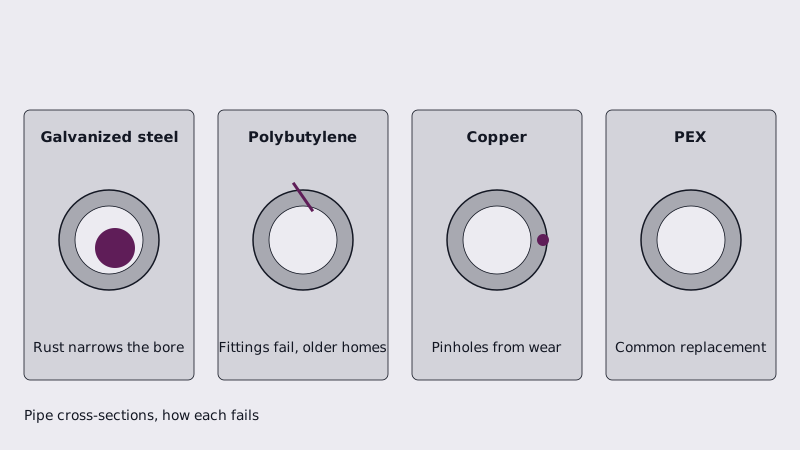
Two materials lead to a repipe most often: galvanized steel and polybutylene. Galvanized pipe corrodes from within and narrows across decades. Polybutylene, a gray plastic used mainly in homes built before about 1995, has a record of fitting failures. Copper can also develop pinholes. PEX is the common replacement today.
Murrieta is a young city for the most part, with a median home built around the year 2000, so galvanized and polybutylene are less common here than in older Southern California towns. They could turn up in older pockets of the city and in older rural houses, though we have no data by neighbourhood. We do not know what any individual home has, so look at the pipes where they enter the water heater or the main.
If you have polybutylene or galvanized lines, see the pages on polybutylene pipe replacement and galvanized pipe replacement. For copper pinholes, the page on fixing a pinhole leak in copper explains when a patch is enough.
Common questions
How long does a whole-house repipe usually take?
Small houses may finish in a few days, while larger ones take longer, plus time for patching, painting and inspection. The plumber should set out a schedule after seeing the house. Ask for how many hours each day the water will be off and whether you need somewhere else to stay.
Does a repipe add value to a house?
It can help in a sale, because buyers and inspectors worry about old or failing pipe, but nobody can promise a return. New pipe removes a known risk and may ease insurance questions. Ask your agent or insurer, and keep the permit and paperwork.
Can I repipe only part of the house?
Yes, partial repipes are common, such as replacing one run or the lines on one side of the house. The danger is that old pipe left in place may fail next. Ask the plumber which sections are in worse shape and whether a phased plan makes sense.
Do I need to move out during a repipe?
Usually not, but it will be inconvenient. Water is shut off for stretches, walls are opened and workers come and go. Many families stay, with plans for showers and cooking. If you have infants, medical needs or a tight timeline, ask the plumber about the schedule.
Last changed