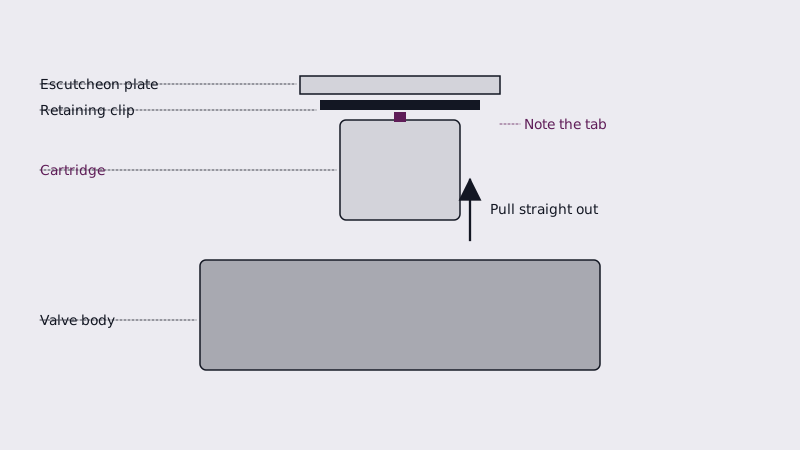
The job runs in order: cut the water to the shower, remove the trim and handle, pull the cartridge or the seats and springs, fit a matching new part, and put everything back together. Most Delta single-handle shower valves contain a replaceable cartridge, so a dripping spout or head usually means that part has worn out. Other fixtures in the same family of jobs are on faucets, showers and disposals.
Matching the part is the step that trips people up, because Delta has made many valve designs over the years. Look first, buy second, and carry the worn part into the shop so you can compare. A drip with the shower off wastes water around the clock; EPA data show a typical household loses upward of 9,300 gallons of water each year to leaks.
Which Delta shower valve do I have?
Remove the handle and see what sits behind it. Delta single-handle valves are commonly a cartridge type with a stem you pull straight out, or an older seat-and-spring type with a ball or a stem plate inside. Photograph the valve, note the handle style, and compare it with Delta's parts guide, or show the worn piece at a hardware store counter.
Model numbers help. Check the box, the receipt or any stamp on the old cartridge. If the house dates from the 1990s or later, as most Murrieta homes do, the valve is more likely a newer cartridge design than a classic seat type, though renovations mix things up.
A different brand may sit behind a Delta-looking handle, because trim and valve are sold separately. Confirm the valve body brand before ordering.
How do I shut off the water for a shower repair?
Most showers lack their own shutoff, so close the house's main shutoff valve and then run the shower to drain the line. Some homes have stops on the valve itself, behind the trim. If your bathroom has an access panel in the wall behind it, look there for a local valve.
Close the drain with a rag so screws and clips cannot fall in. Put a towel down in the tub so dropped tools cannot mar the finish.
Should the main shutoff resist closing or drip, put the tools down and call a plumber, since a worn shutoff valve becomes a second repair. A plumber can fit a shutoff for the bathroom, which makes future repairs easier.
How do I change a Delta shower cartridge?
Pry off the handle cap and undo the screw or set screw. Lift the handle free and take off the escutcheon plate. Next, release the retaining clip or bonnet nut, then grip the old cartridge and draw it straight out, using pliers or a cartridge puller. Insert the new one facing the same way, with the hot side on the correct side, replace the clip, handle and trim, then open the water slowly and test.
Orientation matters. Note the position of the cartridge's tab or stem marking before you pull it, or the hot and cold will be reversed and the shower can scald. Test with your hand before you step in.
Lubricate the O-rings with plumber's silicone grease. Petroleum jelly can swell rubber, so avoid it. Take care with the clip: it is small and flies out. A magnet and a bucket help.
Hard water, which third-party estimates put at moderately hard to hard in Murrieta, scales cartridges, so a new one lasts longer if you wipe the area and the valve body is clean.
What if the valve has seats and springs, not a cartridge?
Behind the bonnet, older Delta valves hold two rubber seats and springs. Take off the bonnet nut and stem, then use a screwdriver to lever out the worn seats and springs, noting their positions. Install the new ones with the tapered end of each spring toward the valve body, then refit the stem and handle.
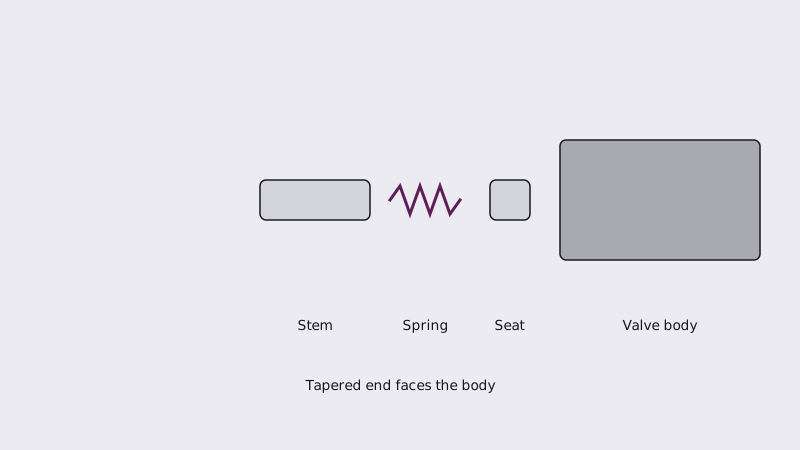
A kit of seats and springs costs little, and replacing both seats and springs together is usual. If the metal body shows pitting where the seat sits, the valve may be worn beyond repair, and replacing the valve means opening the wall.
At that stage, hiring a plumber is the sensible move. A valve swap needs a clean cut, new pipe fittings and usually access from behind or a tile cut.
Why does the shower still drip after a new cartridge?
Check that the cartridge is fully seated, the retaining clip is in, and the O-rings are not twisted. A drip from the showerhead can also come from mineral scale clogging the head, or from a worn diverter. If the spout drips on a tub-shower, check the diverter. The valve body may be damaged if the drip persists.
Also check house pressure. High pressure wears seals faster, and a gauge on an outdoor faucet takes a minute; 80 psi is the limit under the California Plumbing Code. For the details, see adjusting a pressure regulator.
A drip from the wall under the shower, a stained ceiling below, or a damp wall points to a leaking joint inside, not a cartridge. See shower leak repair.
When does a Delta shower repair need a plumber?
Bring one in when the shutoff cannot be closed, tile or drywall must be opened, the valve body is pitted or cracked, the leak sits inside the wall, or you would rather not dismantle it yourself. In California a contractor license is generally expected for jobs of $1,000 or more in labor and materials, or any job needing a permit.
While the plumber is there, ask about other fixtures: a kitchen sink faucet, a garbage disposal that hums, or a leaking supply line. Grouping jobs saves a second visit.
No sourced price is available, so none appears here. Anything you send through the form is passed to a nearby plumbing company, which pays us a fee for the introduction. That company writes the quote and carries out the repair. Other jobs are listed on the home page, and the leaky faucet guide covers a drip at a sink.
Common questions
Do I need to buy the same Delta cartridge?
Yes, or an exact equivalent. Cartridges differ in length, stem and spline, and a close match can still leak. Take the worn one with you when you shop or check the model in the Delta parts guide. Do not force a cartridge that does not slide in easily.
Can I fix a shower drip without shutting the main valve?
Only if the valve has its own built-in stops behind the trim. Most do not, so you close the house main shutoff instead. Never work on a live valve, because water will spray out of the opening as soon as the cartridge comes free.
Why is my shower hot water lukewarm after a repair?
The cartridge may be rotated 180 degrees, so hot and cold are reversed, or its temperature limit stop may be set too low. Remove the handle and check both the limit stop setting and the orientation of the cartridge before you test it again.
Is a dripping showerhead the same as a leaky faucet?
Not always. A showerhead drip often means the valve is not closing completely, but scale trapped in the head can cause a slow drip as well. Soak the head in vinegar and rinse it first, then judge whether the valve itself needs a new cartridge.
How long will the repair take me?
Plan on an hour or two the first time, allowing for a trip to the store if the part does not match. A second pair of hands to hold the flashlight helps, and so does a bucket for the small parts. A plumber can usually do the same job in less time.
Last changed