Most dripping tub faucets are fixed by replacing one worn part: a cartridge inside a single-handle valve, or a washer plus seat in a two-handle type. The job takes tools most homes own and an hour or two. This page also covers pipes under the sink, which belong with the faucets, sinks and disposals group of jobs.
What makes a bathtub faucet drip?
Wear inside the valve. In a single-handle faucet the rubber seals on the cartridge harden or the cartridge itself wears. In a two-handle faucet a rubber washer presses on a brass seat; when it hardens or the seat pits, water seeps past. Mineral scale from hard water speeds all of it up.
Drip from the spout only means the hot or cold side is not sealing. Dampness at the handle points to a worn O-ring or packing. Water appearing in the wall or the ceiling below is a separate problem, so stop and call a plumber. A constant drip wastes water too, and EPA data show leaks adding up to more than 9,300 gallons yearly in an average home.
Is it harder in an older home?
Often, yes. Older valves can have corroded stems, seized screws, brittle tile or no way in through an access panel behind the wall. In a house from the 1970s or earlier, a valve that has been in the wall for decades may need full replacement instead of a new cartridge. In any older neighborhood, expect more surprises.
Newer homes, including the many built around 2000 or later in Murrieta, tend to have common valve brands, so parts are easy to find. If you cannot tell the brand, a plumber can identify it, and a hardware store can match a cartridge to an old one. Stopping a dripping faucet gives the general picture.
Which problems call for a plumber?
Call a plumber if the valve is stuck and might snap, the water will not stop, the leak sits behind the wall, a pipe is corroded, the disposal leaks through its body, or the faucet brand is a mystery. The plumber can replace the entire valve if needed.
Send the quote form to arrange a visit. Your request goes to local plumbing businesses, which pay us a fee for it. For replacement jobs ask what the plumber supplies, and see faucet replacement cost for how quotes are built.
How do I repair a two-handle tub faucet?
Turn the water off, remove each handle and stem, and fit a rubber washer of the same size at the bottom of the stem. If the metal seat in the valve body feels rough, smooth it with a seat dressing tool or replace it. Reassemble, then open the water slowly and check for drips.
Washers are cheap and come in kits, but sizes vary, so take the old one with you. Old stems may be stuck from corrosion; do not force them to the point of cracking tile or the valve body. Our page on a two-handle leaky faucet has more on this layout, and the single-handle version covers the other.
How do I fix a single-handle tub faucet, such as a Moen?
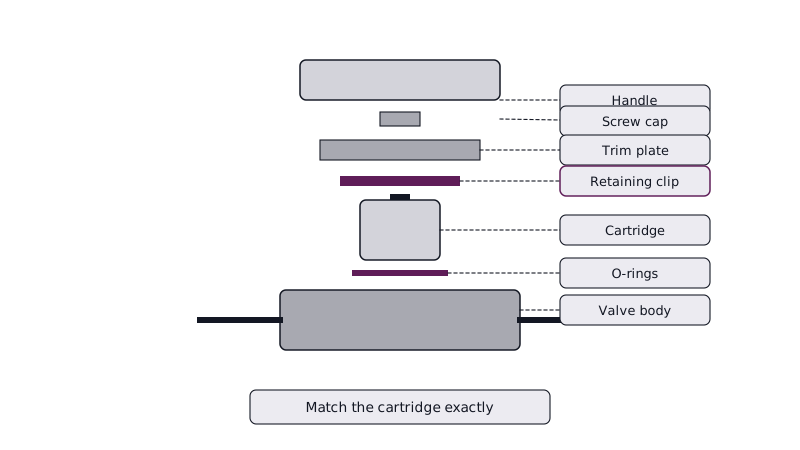
Shut the supply for the bathroom or for the entire house, and open the faucet to relieve pressure. Pry off the handle cap, loosen the set screw, remove the handle together with the trim plate, then pull the retaining clip and slide the cartridge out in a straight line. Match the new cartridge to the old, coat the O-rings in plumber's grease, and put everything back in reverse order.
Notes that save frustration:
- Photograph each step so you can put things back in order.
- Moen cartridges are held by a clip and can stick; a cartridge puller tool may be needed. Check the model on the valve or trim.
- Orientation matters. Put the cartridge in with the same alignment, or hot and cold reverse.
- Plug the tub drain with a rag so small screws do not vanish.
- Test by reopening the water slowly and running the faucet with the trim off first.
For related guides see fixing a leaky tub faucet and leaky shower faucets.
What if the water comes from a pipe under the kitchen sink?
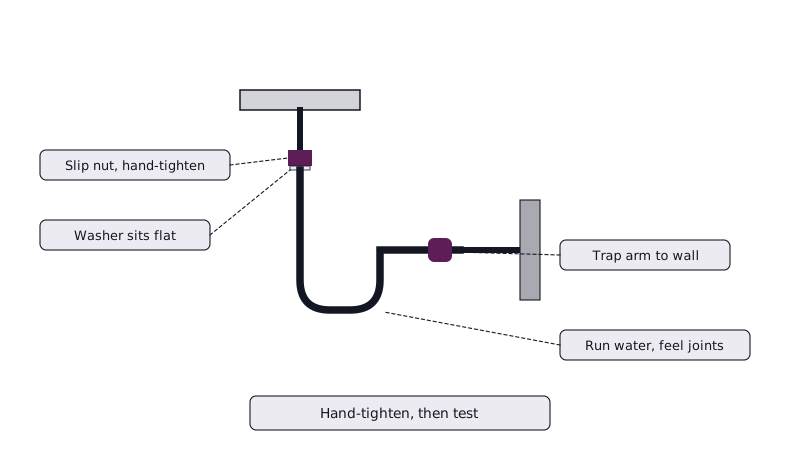
Dry the cabinet, run the water and feel along the pipes with a paper towel to find the wet spot. Leaks under a sink most often trace to a slip nut on the P-trap that has worked loose, a worn washer, a dripping supply line, or the garbage disposal's drain or flange. Tighten by hand, replace a worn washer, and re-test.
Common finds:
- P-trap joints. Hand-tighten the nuts, check the washer sits flat.
- Supply hoses. Braided hoses age; a bulging or crusted hose should be replaced.
- Disposal. Water from the bottom of the unit means the seal inside has failed and the disposal needs replacing; leaks at the sink flange can be resealed. See the sink pipe guide.
- Faucet base. Water that runs down the supply lines may start at the faucet, not the pipe.
Common questions
Does a dripping tub faucet add to the water bill?
Yes, though a single drip adds little. A steady drip from the hot side also wastes heated water and gas or electricity, and the total builds up over months. Fixing it costs little compared with years of drips. See can a leaky faucet raise a bill.
Must the whole house be shut off?
Usually. Many tubs have no local shutoff behind the wall, so close the whole-house valve unless your tub valve has built-in stops. Next, run the lowest tap in the house to drain the pipes ahead of dismantling anything, and keep a towel ready.
How long does the repair last?
A new cartridge or washer commonly lasts for years, but hard water scale shortens that. A house with heavy scale may see drips return sooner, and fitting a softener, or cleaning the valve parts now and then, can help. Keep the old part so you can match it next time.
What explains a drip that continues after a new cartridge?
A cartridge of the wrong type, or one seated badly, can cause it, and so can damage to the valve body. Check the match and the orientation first. If it still drips, the valve body or the seat could be at fault, and that calls for a plumber.
For the wider picture, start with the plumber guide for Murrieta.
References
Last changed