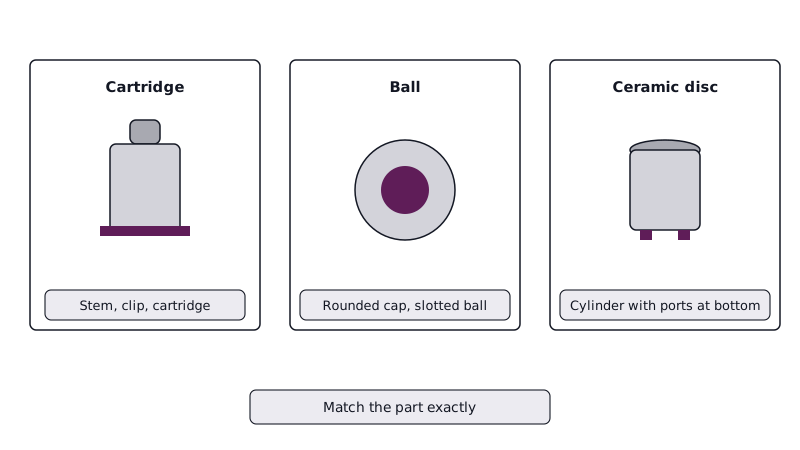
A single-handle faucet uses one of three mechanisms: a cartridge, a ball, or a ceramic disc. The leak's location tells you which part to replace. Drips at the spout come from a worn seat, cartridge or disc. Water around the handle or base means O-rings or a loose cap. The fixtures and disposals hub lists related sink work.
How can I tell which single-handle faucet I own?
Watch how the handle moves and check what sits beneath it. A cartridge faucet has a stem and a retaining clip or nut. A ball faucet, found in one brand's design, is topped by a rounded cap and holds a slotted ball inside. A ceramic disc faucet contains a broad cylinder with two or three ports on its underside. Removing the handle shows which.
If you cannot tell, find the brand name on the spout or handle and the model on the label, or take a photo of the internals and bring it to a plumbing counter. Matching the part exactly matters: cartridges look similar and fit differently. Some makers publish parts lists online by model.
Do the work with the sink drain plugged or covered by a rag, since small screws and clips vanish quickly.
What is the way to shut off the supply and remove the handle?
Close the two shutoff valves under the sink, hot and cold, by turning them clockwise. Turn the faucet on to relieve the pressure. Then pry the small cap off the handle with a thin screwdriver, remove the screw or set screw with the right hex key, and lift the handle straight off. Lay each part out on a towel in the order removed.
Where the sink has no shutoff, or the one there will not turn, use the main valve for the whole house and schedule a replacement for the stuck valve later; see toilet and fixture shutoff valves for how those fail.
Wear safety glasses if scale is thick, since crusty parts can snap.
How is the cartridge, ball or disc swapped out?
With a cartridge model, remove the clip or nut holding it in, then pull the cartridge straight up (a puller tool or a gentle twist may be needed). Install the identical model with a thin film of plumber's grease and reassemble. For a ball faucet, replace the ball, the two seats and springs, and the O-rings. For a ceramic disc, replace the cylinder and its seals.
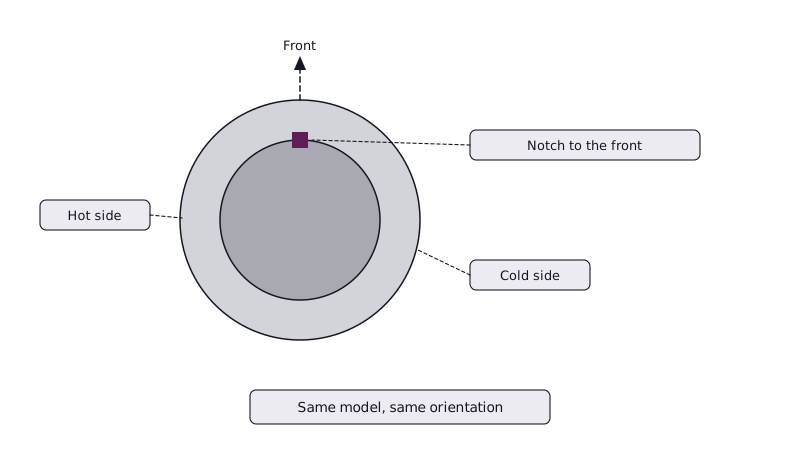
Steps for a cartridge faucet, in sequence:
- Note the position of the cartridge, usually with a notch facing forward, so the hot and cold sides stay correct.
- Remove it, and wipe the inside of the faucet body clean.
- Seat the replacement facing the same way, push it fully down and refit the clip or nut.
- Put the handle back and open the water slowly.
Scale from hard water often causes cartridge failure. Third-party estimates put Murrieta water at roughly 6 to 11 grains per gallon (moderately hard to hard), meaning scale builds on seats and discs. Soaking reusable parts in vinegar loosens it. The scale itself is explained in removing hard water scale.
Why does it still leak at the base or spout after the repair?
Leaks where a swivel spout meets the body come from worn O-rings around the body, which are cheap and quick to replace. A drip from the spout after a new cartridge usually means a damaged seat, a scratched body, a cartridge that has not seated properly, or the wrong part. A leak at the handle means a loose cap or a missing seal.
Lubricate new O-rings with plumber's grease, not oil, and do not over-tighten the retaining nut, which can distort the cartridge. If the body is pitted or corroded where the seals sit, the faucet is past repair and replacement is the sensible choice. Related pages: fixing a leaky sink faucet and the wider leaky faucet guide.
Also inspect the shutoff valves and supply lines under the sink: a drip there looks like a faucet leak. Wipe each fitting dry and look again a minute later.
What does a leaking faucet cost me, and when is replacement smarter?
By EPA figures, a faucet that drips every second can waste upward of 3,000 gallons a year, which means a repair earns its cost back over time. For the math, see the guide on leaky faucets and high water bills. Replace the faucet when it passes 10 to 15 years of age, the finish is failing, or parts cannot be found.
Compare the price of a repair kit with a new faucet and labor. Our faucet replacement cost guide lists what goes into a plumber's quote. If you do replace it, buy a faucet with a washerless cartridge from a maker that still sells parts for it.
This repair is within reach if basic hand tools do not worry you. Call a plumber if the shutoff valves fail, the faucet body is corroded in place, the sink is stone or has no access from below, or you hit a leak you cannot trace. Murrieta Creek Plumbing arranges a local plumber, and the business that quotes pays a fee for the introduction. Include the faucet brand and model when you send the quote request.
Common questions
Must the main valve be closed for this repair?
Not usually. The two valves under the sink are enough. Use the main if those valves are stuck, missing or leaking. After finishing, open the faucet while turning the water back on to let air out and keep the aerator from clogging with debris.
How do I find the right replacement cartridge?
Read the brand and model off the faucet, check the owner's manual, or take the old cartridge along to a plumbing supply counter and match it side by side. Looks can mislead, so check height, stem splines and the number of ports. Buying the wrong one is the most common repair mistake.
Can I repair a faucet without special tools?
Often yes: a screwdriver, hex keys, adjustable pliers and a rag cover most repairs. A cartridge puller makes stuck cartridges easier, and plumber's grease protects O-rings. A basic toolkit is cheaper than a service call, though a stuck part may defeat it.
Why did the new cartridge start leaking again quickly?
Scale or debris on the seat, a scratched faucet body, a wrong cartridge, or a cartridge not fully pushed in are common reasons. Flush the lines before reassembly by opening the valves briefly with the aerator off. If it repeats, the body is damaged.
Is a leaking faucet covered by anything?
It can be. Some makers publish parts coverage for their faucets, so check the support page for your model before buying a kit. Keep the model number and a photo of the leak ready when you contact them, and keep any receipt from the original install.
References
- EPA WaterSense, fix a leak
- Faucet manufacturer repair instructions for your model
Last changed