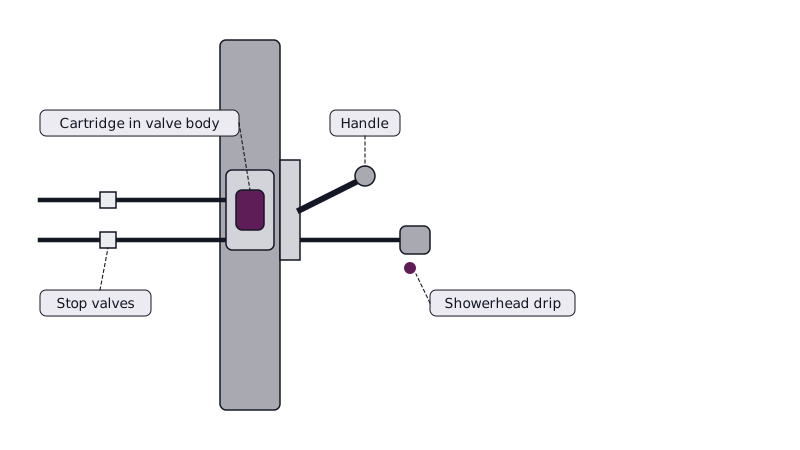
When a shower keeps dripping after the water is off, a part inside the valve has worn, and replacing that part is the fix. Which part depends on the type of valve: a washer and seat in older two-handle showers, or a cartridge in single-handle ones. Small fixture repairs like this sit alongside the sink and garbage disposal repair jobs a local plumber handles.
Why does my shower faucet keep dripping?
Either a seal in the valve has worn through or scale has fouled it. Two-handle valves lose a rubber washer or the brass seat; single-handle valves lose the cartridge or the O-rings on it. Murrieta's moderately hard water, roughly 6 to 11 grains per gallon in third-party estimates, speeds up scale on small seals.
Look at where the drip comes from. A drip from the showerhead points at the valve. A leak at the handle or around the wall plate means a different seal. Water inside the wall, behind a tile or in the ceiling below means you should get a plumber out straight away.
What type of shower valve do you have?
Look at the handles and take off the cover. Two handles, a hot and a cold, mean compression valves with washers. One handle that turns for both volume and temperature is a cartridge or ball valve, and a pull-and-turn handle is often a single-handle cartridge with a diverter.
Brand matters for the replacement part, since cartridges are not interchangeable. Note the maker's name on the handle or inside the trim, then carry the old cartridge to the hardware store for matching. For a Delta-style valve, see fixing a Delta shower faucet.
What are the repair steps for a shower that will not stop dripping?
Shut the stop valve, or the main when the shower has no stop, and open the faucet to empty the line. Pry off the handle cap, then take away the handle and the escutcheon. Next, remove the cartridge by pulling it, or unscrew the stem if the valve has one, fit a fresh washer, seat or cartridge, then reassemble everything and test.
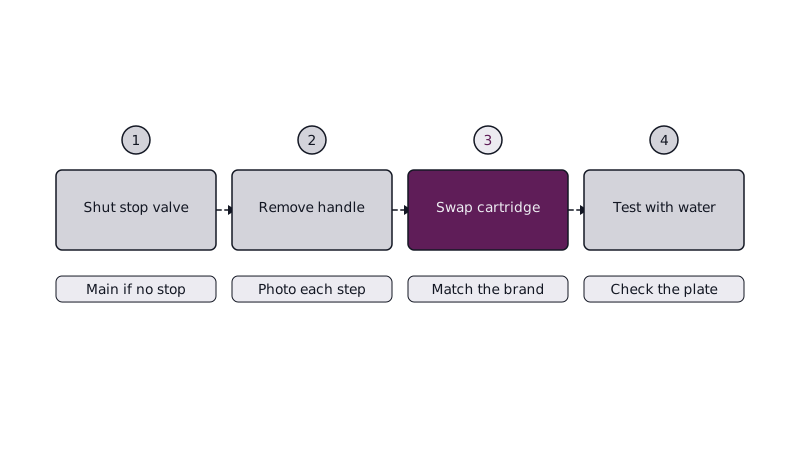
Put a towel over the drain so a screw does not vanish. Photograph each step for reassembly. Coat the new O-rings lightly with plumber's grease. Pull a stuck cartridge with a puller made for the brand instead of pliers, which can chew the brass. Test with the water on slowly and look behind the wall plate for weeping.
If you have a tub and shower, the same repair applies to the tub spout, and two other guides cover it: repairing a dripping tub faucet and fixing a leaky bathtub faucet.
What if it still drips after the new cartridge?
Check three things: a compression valve's seat may be pitted and need a seat wrench or dressing tool, the cartridge may be an unsuitable model or badly seated, or pressure may run high enough to wear seals out early. According to EPA figures, leaks drain over 9,300 gallons a year from a typical home, so a stubborn drip is worth stopping.
Measure pressure with a hose bib gauge. Readings over 80 psi exceed the plumbing code limit and should be brought down by a regulator, which is the real fix. If a mixing valve is faulty, no part swap on the shower side will fix it.
Can a leaking shower faucet damage the wall?
Yes, if the water escapes behind the trim instead of out of the spout. Water inside a wall can rot framing, loosen tile and grow mold. Signs include a soft wall, stains on the other side, a musty smell or a stained ceiling beneath an upstairs shower.
Spout and head drips mostly waste water. A leak that appears only when the shower runs is often in the pipe or the valve body, and not fixable with a cartridge. See shower leak plumbers for when a plumber needs to open the wall.
At what point do I need a plumber for this?
Phone one if the valve body is corroded or soldered in, if the shutoff does not hold, if water is leaking inside the wall, if you cannot identify the cartridge, or if the repair you tried still leaks. Fixing the valve body means opening tile or an access panel.
Older homes can have corroded or older valves that are stubborn. Where a rear access panel exists behind the shower, the valve is often easier to service. A visit for a valve replacement is the same work as faucet swaps, covered in faucet replacement cost.
Common questions
Does the whole house have to be shut off for a shower repair?
Only if the shower has no stop valves, which is common on older showers. Many modern valves have built-in stops you can close with a screwdriver. If neither exists, shut the main and empty the pipes through a faucet on the lowest floor, and warn the household so nobody opens a tap.
Which tools do I need?
A screwdriver set, an Allen key, adjustable pliers, a cartridge puller if the brand needs one, plumber's grease, a towel and a replacement part. A flashlight helps. Take a photo of the parts as you remove them so you can put them back in the right order, and bring the old part for matching.
Why does the water come out of both the tub spout and showerhead?
That is a diverter that is not seating, usually scale or a worn seal. Mineral buildup is common with hard water. A cleaning or replacement of the diverter or the spout restores it. If the diverter is in the valve, the cartridge or stem is replaced.
Is a dripping shower covered by the same repair as a sink faucet?
Both come down to a worn seal, but the parts differ and access is harder. Sinks have shutoffs and open spaces, showers hide valves behind a wall. If you are comfortable fixing a sink faucet, a shower is within reach with patience and a photo of each step.
How can I reach a plumber for this job?
Fill in the quote page form. We forward the request to a nearby plumbing company, and that company does the work under its own name and pays this site a fee for the referral. We do not employ plumbers. For more, see how it works, or return to the home page.
Last changed